The Prague Post - CO2 pollution expected to hit new record in 2023: researchers

EUR -
AED 4.236516
AFN 72.660513
ALL 96.076566
AMD 435.018833
ANG 2.064579
AOA 1057.614991
ARS 1608.357353
AUD 1.634275
AWG 2.0789
AZN 1.960958
BAM 1.965724
BBD 2.323923
BDT 141.578444
BGN 1.971419
BHD 0.435654
BIF 3425.427746
BMD 1.153343
BND 1.480344
BOB 7.973635
BRL 6.046286
BSD 1.153845
BTN 107.498905
BWP 15.745241
BYN 3.567914
BYR 22605.516438
BZD 2.320626
CAD 1.582305
CDF 2618.087925
CHF 0.912098
CLF 0.026705
CLP 1054.443846
CNY 7.926982
CNH 7.953001
COP 4272.661742
CRC 539.855899
CUC 1.153343
CUP 30.563581
CVE 111.932173
CZK 24.471391
DJF 205.468201
DKK 7.470858
DOP 67.98988
DZD 152.246963
EGP 60.250043
ERN 17.30014
ETB 181.07503
FJD 2.572242
FKP 0.865783
GBP 0.861697
GEL 3.13133
GGP 0.865783
GHS 12.577179
GIP 0.865783
GMD 85.347878
GNF 10126.348898
GTQ 8.826446
GYD 241.401278
HKD 9.033972
HNL 30.644463
HRK 7.545511
HTG 151.350658
HUF 391.100229
IDR 19545.69832
ILS 3.600041
IMP 0.865783
INR 107.460742
IQD 1510.878905
IRR 1516645.617921
ISK 143.78754
JEP 0.865783
JMD 181.269643
JOD 0.817726
JPY 182.486467
KES 149.415527
KGS 100.857395
KHR 4624.904034
KMF 493.630678
KPW 1037.994543
KRW 1723.751138
KWD 0.353557
KYD 0.961601
KZT 554.897876
LAK 24739.200343
LBP 103281.837076
LKR 359.666052
LRD 211.465763
LSL 19.399179
LTL 3.405521
LVL 0.697646
LYD 7.358471
MAD 10.811145
MDL 20.221051
MGA 4809.439469
MKD 61.751423
MMK 2421.719114
MNT 4135.704941
MOP 9.309885
MRU 46.271835
MUR 53.6416
MVR 17.831118
MWK 2002.202766
MXN 20.548703
MYR 4.543598
MZN 73.698163
NAD 19.399519
NGN 1564.51317
NIO 42.351136
NOK 10.965238
NPR 171.992801
NZD 1.972192
OMR 0.443447
PAB 1.153885
PEN 3.953085
PGK 4.962545
PHP 69.163653
PKR 322.090373
PLN 4.270978
PYG 7497.624391
QAR 4.202794
RON 5.103658
RSD 117.405646
RUB 99.211165
RWF 1682.726963
SAR 4.330321
SBD 9.278918
SCR 16.396484
SDG 693.159201
SEK 10.762706
SGD 1.476025
SHP 0.865306
SLE 28.429804
SLL 24185.031717
SOS 659.140589
SRD 43.106152
STD 23871.864791
STN 24.796868
SVC 10.096278
SYP 127.477541
SZL 19.399309
THB 37.77255
TJS 11.048348
TMT 4.036699
TND 3.364881
TOP 2.776972
TRY 51.114069
TTD 7.820857
TWD 36.70632
TZS 2995.810114
UAH 50.740886
UGX 4361.206714
USD 1.153343
UYU 46.737373
UZS 14041.947004
VES 520.091621
VND 30321.378937
VUV 137.718825
WST 3.151186
XAF 659.31989
XAG 0.016348
XAU 0.00025
XCD 3.116966
XCG 2.079516
XDR 0.819979
XOF 653.366781
XPF 119.331742
YER 275.15868
ZAR 19.430709
ZMK 10381.470639
ZMW 22.587207
ZWL 371.375871
  • GSK

    0.0900

    52.15

    +0.17%

  • BCC

    -2.4900

    69.35

    -3.59%

  • NGG

    -2.0700

    85.33

    -2.43%

  • JRI

    -0.0830

    12.24

    -0.68%

  • CMSC

    -0.0300

    22.8

    -0.13%

  • RIO

    -3.2700

    84.45

    -3.87%

  • BP

    1.6000

    46.21

    +3.46%

  • BCE

    -0.1000

    25.65

    -0.39%

  • CMSD

    0.0550

    22.945

    +0.24%

  • RYCEF

    -0.5900

    16.01

    -3.69%

  • BTI

    0.1200

    58.21

    +0.21%

  • RBGPF

    0.1000

    82.5

    +0.12%

  • VOD

    -0.0650

    14.305

    -0.45%

  • RELX

    -0.3100

    33.55

    -0.92%

  • AZN

    -0.0550

    188.365

    -0.03%

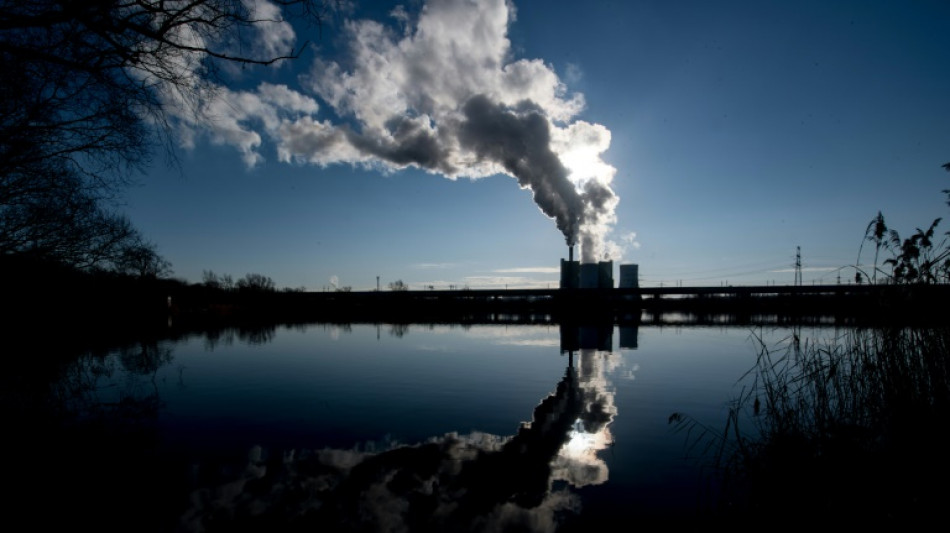
CO2 pollution expected to hit new record in 2023: researchers
CO2 pollution expected to hit new record in 2023: researchers / Photo: Hendrik Schmidt - dpa/AFP/File

CO2 pollution expected to hit new record in 2023: researchers

Global emissions of planet-heating carbon dioxide are expected to rise around one percent to reach a new all-time high in 2023, the climate scientist behind the preliminary research said Tuesday.

Text size:

Scientists say carbon pollution will need to be cut almost in half this decade to meet the world's targets of limiting global warming and avoiding catastrophic climate impacts.

Global CO2 emissions should be falling by around five percent this year, said Glen Peters, research director at the CICERO climate research institute in Norway.

Instead they have continued to rise, according to his research, with current expectations that the year will see emissions up between 0.5 percent and 1.5 percent.

"It would be very unlikely that emissions decline in 2023," he told AFP.

The preliminary figures show just how dauntingly hard it will be to slash emissions fast enough to meet the Paris Agreement goal of capping global warming at 1.5 degrees Celsius above pre-industrial levels.

Heating beyond that threshold risks triggering dangerous tipping points in the climate system, scientists warn.

"Each year emissions keep rising makes it all the harder to reach pathways consistent with Paris," said Peters.

The final analysis will be published in December, as world leaders meet in the United Arab Emirates for crunch UN climate talks set to be dominated by international tussling over the future of fossil fuels, the main source of CO2 pollution.

Earlier this year, the International Energy Agency (IEA) said that for the first time world demand for oil, gas and coal is forecast to peak this decade due to the "spectacular" growth of cleaner energy technologies and electric cars.

But the energy watchdog has also warned of the negative impact of increased fossil fuel investments and "stubbornly high emissions" during the post-pandemic economic rebound and the energy crisis driven by Russia's invasion of Ukraine.

Peters said clean energy should be starting to displace demand for fossil fuels.

"This does not seem to be happening in any meaningful way yet, which is disappointing," he said.

- 'Doing half the job' -

Scientists had hoped back in 2015 that emissions might be peaking, he said, then again during the pandemic there were hopes that 2019 might mark the turning point.

"Yet, here we are again, with a new peak in 2022, and yet another peak expected again in 2023," Peters said.

"My concern is that we are doing half the job, growing clean energy, and not doing the other half of the job, transitioning away from fossil fuels."

The annual "Global Carbon Budget" report for the year will be published in December and show CO2 emissions from all sources.

The calculations are based on data from monthly and quarterly IEA reports.

V.Sedlak--TPP