The Prague Post - Climate change worsened Chinese extreme heat and flooding event in 2020: study

EUR -
AED 4.121569
AFN 72.38042
ALL 90.956239
AMD 404.895503
ANG 2.008636
AOA 1029.12868
ARS 1716.243843
AUD 1.596114
AWG 2.022906
AZN 1.910288
BAM 1.959165
BBD 2.25878
BDT 138.698247
BGN 1.961552
BHD 0.423227
BIF 3361.674463
BMD 1.122278
BND 1.433462
BOB 13.205684
BRL 5.572336
BSD 1.121526
BTN 106.412789
BWP 15.449538
BYN 3.292956
BYR 21996.644389
BZD 2.255474
CAD 1.576121
CDF 2599.195443
CHF 0.925229
CLF 0.028295
CLP 1107.081672
CNY 7.494627
CNH 7.484925
COP 3559.213783
CRC 511.7791
CUC 1.122278
CUP 26.915233
CVE 110.454732
CZK 24.312465
DJF 199.703037
DKK 7.474785
DOP 68.78816
DZD 150.761969
EGP 61.709802
ERN 16.834167
ETB 182.413037
FJD 2.510756
FKP 0.839248
GBP 0.839312
GEL 2.906473
GGP 0.839248
GHS 13.003336
GIP 0.839248
GMD 83.0488
GNF 9925.048596
GTQ 8.572726
GYD 234.883467
HKD 8.801548
HNL 30.108719
HRK 7.550906
HTG 146.982477
HUF 366.16332
IDR 20306.325719
ILS 3.48529
IMP 0.839248
INR 106.555218
IQD 1700.120355
IRR 2056433.737693
ISK 136.671324
JEP 0.839248
JMD 177.985732
JOD 0.795667
JPY 176.154966
KES 145.620137
KGS 98.141624
KHR 4581.870436
KMF 493.248844
KPW 1010.049954
KRW 1485.62604
KWD 0.348681
KYD 0.934605
KZT 509.194661
LAK 25236.349342
LBP 100428.208974
LKR 372.389666
LRD 191.208445
LSL 18.580516
LTL 3.313794
LVL 0.678855
LYD 7.182337
MAD 11.015722
MDL 20.242772
MGA 5071.711853
MKD 61.711003
MMK 2356.902556
MNT 4039.257507
MOP 9.060363
MRU 44.819989
MUR 52.926854
MVR 17.350098
MWK 1944.640375
MXN 20.978724
MYR 4.584847
MZN 71.712284
NAD 18.580516
NGN 1494.941588
NIO 41.270892
NOK 10.440533
NPR 170.260462
NZD 1.9696
OMR 0.431514
PAB 1.121426
PEN 3.851516
PGK 5.022628
PHP 71.397096
PKR 310.340583
PLN 4.398959
PYG 6486.141467
QAR 4.088022
RON 5.364264
RSD 117.702181
RUB 90.001526
RWF 1656.946193
SAR 4.212188
SBD 9.061921
SCR 15.753426
SDG 675.051828
SEK 11.121795
SGD 1.433429
SHP 0.838679
SLE 25.756323
SLL 23533.608738
SOS 640.900897
SRD 42.253198
STD 23228.884072
STN 24.542157
SVC 9.812856
SYP 14591.855276
SZL 18.579915
THB 37.899566
TJS 10.334452
TMT 3.939195
TND 3.348852
TOP 2.702175
TRY 55.812563
TTD 7.620089
TWD 36.570317
TZS 2969.100125
UAH 50.771612
UGX 4940.486443
USD 1.122278
UYU 44.977259
UZS 13421.053804
VES 987.36753
VND 29002.4634
VUV 133.127953
WST 3.106231
XAF 655.957
XAG 0.02082
XAU 0.000280868217
XCD 3.033012
XCG 2.021172
XDR 0.793509
XOF 655.957
XPF 119.331742
YER 264.965606
ZAR 18.628085
ZMK 10101.84443
ZMW 22.547731
ZWL 361.372986
SSP 6447.822226
MXV 2.367724
  • AZN

    -1.0800

    171.49

    -0.63%

  • GSK

    -0.4600

    50.75

    -0.91%

  • VOD

    -0.3800

    15.74

    -2.41%

  • RIO

    -0.7200

    83.42

    -0.86%

  • BTI

    -0.9900

    59.48

    -1.66%

  • CMSC

    0.0000

    19.6

    0%

  • NGG

    -0.7800

    81.86

    -0.95%

  • RYCEF

    -1.7500

    15.26

    -11.47%

  • RBGPF

    2.6200

    72.77

    +3.6%

  • BCC

    -0.5500

    77.74

    -0.71%

  • BCE

    -0.4100

    20.4

    -2.01%

  • BP

    1.2700

    51.32

    +2.47%

  • CMSD

    0.1800

    19.78

    +0.91%

  • RELX

    -0.0800

    40.54

    -0.2%

  • JRI

    0.0700

    10.75

    +0.65%

Climate change worsened Chinese extreme heat and flooding event in 2020: study
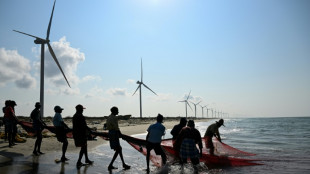
Climate change worsened Chinese extreme heat and flooding event in 2020: study / Photo: STR - AFP

Climate change worsened Chinese extreme heat and flooding event in 2020: study

Man-made global warming exacerbated an incident of extreme flooding and heat in eastern China in 2020, according to a study released Wednesday, which highlighted the need to prepare for increasingly intense episodes of such weather in the country.

Text size:

Researchers said that warming created by human activity caused an increase in rain that summer by around 6.5 percent, and increased heat by around one degree Celsius (33.8 degrees Fahrenheit).

Record rains fell in June and July around the lower part of the Yangtze River during the monsoon, causing the deaths of more than 100 people and billions of dollars in damage, said the study published in the journal Science Advances.

At the same time, extreme heat hit the south of the country, putting pressure on health care and energy systems, as well as on agriculture and infrastructure.

These simultaneous heat and precipitation phenomena are physically interconnected, and commonly occur at the same time in that part of the world, but in 2020 they were exceptional, the researchers said.

To determine the impact of warming linked to human activity, scientists modeled the weather conditions leading up to and during the events, based on measurements in the real world.

They then constructed a scenario simulating conditions as they might have been without human-caused warming, by adjusting humidity levels, air and ocean temperatures. They finally compared the two models to determine the role of human influence.

The researchers also warned about future weather events, noting that by the end of the century, precipitation in the region could increase by 14 percent compared to 2020, and that the season could be 2.1 degrees Celsius warmer.

The results of the study "underscore the necessity of preparing for more intense spatially compounding flood-heat hazards over eastern China," the researcher said, since they "could lead to increased economic damage and loss of life."

P.Svatek--TPP