The Prague Post - EU monitor says sea temperatures near all-time highs as El Nino looms

EUR -
AED 4.271823
AFN 76.190552
ALL 92.148244
AMD 421.485123
ANG 2.081865
AOA 1067.811938
ARS 1758.451816
AUD 1.609957
AWG 2.096657
AZN 1.976305
BAM 1.955815
BBD 2.338958
BDT 142.721097
BGN 1.973203
BHD 0.438103
BIF 3475.98649
BMD 1.163194
BND 1.470437
BOB 14.486613
BRL 5.919723
BSD 1.161144
BTN 109.770125
BWP 15.59012
BYN 3.575666
BYR 22798.601279
BZD 2.335478
CAD 1.602381
CDF 2681.162153
CHF 0.941251
CLF 0.027245
CLP 1075.768234
CNY 7.805671
CNH 7.799588
COP 3625.082291
CRC 527.004052
CUC 1.163194
CUP 30.824639
CVE 110.261108
CZK 24.196773
DJF 206.79159
DKK 7.474963
DOP 68.730528
DZD 154.876843
EGP 59.344411
ERN 17.447909
ETB 188.314748
FJD 2.576937
FKP 0.859076
GBP 0.858687
GEL 3.025671
GGP 0.859076
GHS 13.243874
GIP 0.859076
GMD 85.490033
GNF 10207.166226
GTQ 8.864687
GYD 242.947691
HKD 9.121523
HNL 31.16224
HRK 7.53447
HTG 151.832473
HUF 363.428792
IDR 20430.338412
ILS 3.503855
IMP 0.859076
INR 110.316092
IQD 1521.285539
IRR 1598897.313929
ISK 140.409061
JEP 0.859076
JMD 184.421418
JOD 0.824706
JPY 178.57316
KES 150.552208
KGS 101.721441
KHR 4703.07659
KMF 493.19407
KPW 1046.87489
KRW 1556.051407
KWD 0.359148
KYD 0.967691
KZT 527.224988
LAK 26022.752631
LBP 103988.911494
LKR 381.816371
LRD 203.212827
LSL 18.641223
LTL 3.434609
LVL 0.703604
LYD 7.351014
MAD 10.941808
MDL 20.060809
MGA 4985.038326
MKD 61.525473
MMK 2442.116225
MNT 4184.665234
MOP 9.379011
MRU 46.77736
MUR 54.507855
MVR 17.971664
MWK 2013.615481
MXN 19.671412
MYR 4.734896
MZN 74.340246
NAD 18.641223
NGN 1537.009974
NIO 42.730696
NOK 10.719415
NPR 175.63935
NZD 1.985467
OMR 0.447237
PAB 1.161169
PEN 3.89543
PGK 5.160173
PHP 72.648444
PKR 321.942407
PLN 4.313297
PYG 6873.052841
QAR 4.232651
RON 5.252401
RSD 117.305772
RUB 99.860231
RWF 1708.513135
SAR 4.36843
SBD 9.298594
SCR 16.047227
SDG 699.665879
SEK 11.148993
SGD 1.470772
SHP 0.861771
SLE 28.625027
SLL 24391.594485
SOS 663.705103
SRD 44.110669
STD 24075.766137
STN 24.50082
SVC 10.160903
SYP 15123.847535
SZL 18.621502
THB 38.231283
TJS 10.741221
TMT 4.082811
TND 3.38698
TOP 2.800692
TRY 56.38757
TTD 7.866925
TWD 36.610485
TZS 3076.095456
UAH 51.683097
UGX 4394.958222
USD 1.163194
UYU 46.74835
UZS 13754.768258
VES 946.458866
VND 30215.707456
VUV 137.274675
WST 3.161662
XAF 655.962043
XAG 0.017527
XAU 0.000266
XCD 3.14359
XCG 2.09288
XDR 0.822438
XOF 655.869007
XPF 119.331742
YER 275.735443
ZAR 18.617908
ZMK 10470.080719
ZMW 22.382787
ZWL 374.547975
  • CMSC

    0.0100

    20.82

    +0.05%

  • NGG

    -0.0600

    78.06

    -0.08%

  • RIO

    0.5600

    103.83

    +0.54%

  • JRI

    0.0600

    12.2

    +0.49%

  • BCC

    -2.3500

    76.86

    -3.06%

  • BCE

    -0.0200

    23.65

    -0.08%

  • GSK

    -1.3500

    48.54

    -2.78%

  • CMSD

    -0.0100

    20.68

    -0.05%

  • AZN

    -2.6600

    160.04

    -1.66%

  • BTI

    -0.2000

    55.15

    -0.36%

  • RYCEF

    0.0400

    19.96

    +0.2%

  • RBGPF

    -1.0000

    69

    -1.45%

  • VOD

    0.4100

    17.31

    +2.37%

  • BP

    1.0700

    44.88

    +2.38%

  • RELX

    -0.8100

    34.7

    -2.33%

EU monitor says sea temperatures near all-time highs as El Nino looms
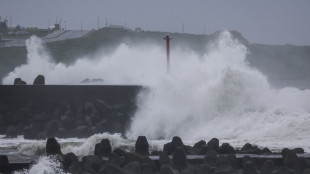
EU monitor says sea temperatures near all-time highs as El Nino looms / Photo: Valery HACHE - AFP

EU monitor says sea temperatures near all-time highs as El Nino looms

The European Union's climate monitor said Friday that ocean temperatures are edging toward record highs as conditions shift toward a potentially powerful El Nino weather pattern.

Text size:

Samantha Burgess from the European Centre for Medium-Range Weather Forecasts (ECMWF) said sea surface temperatures in recent days were just shy of the all-time highs of 2024 -- and May looked set to break its own record.

"It's a matter of days before we are back in record-breaking ocean SSTs (sea surface temperatures) again," Burgess, strategic lead for climate at ECMWF, told AFP.

The Copernicus Climate Change Service said daily sea surface temperatures in April "gradually inched" toward near-record highs, reflecting the transition to El Nino expected in coming months.

Copernicus, which is overseen by the ECMWF, said sea surface temperatures in April were the second-highest measured, with marine heatwaves breaking records in the ocean between the tropical Pacific and United States.

Last month, the World Meteorological Organization said El Nino conditions could develop as soon as May to July.

One phase of a natural climate cycle in Pacific Ocean temperatures and trade winds, El Nino influences global weather and increases the likelihood of drought, heavy rainfall and other climate extremes.

It also adds heat to a planet already warmed from burning fossil fuels. The last El Nino helped make 2023 and 2024 the second- and first-hottest years on record, respectively.

Some weather agencies forecast the coming event will be even stronger -- possibly rivalling a "super" El Nino three decades ago.

Zeke Hausfather, a scientist at Berkeley Earth, an independent climate research organisation, wrote last week that a strong El Nino could significantly raise the chances of 2027 becoming the hottest year ever recorded.

Burgess said it was still too early to predict the event's intensity with confidence as forecasts made during the Northern Hemisphere spring could be unreliable.

But she said regardless of its strength, this El Nino would not go unnoticed.

"We're likely to see 2027 exceed 2024 for the warmest year on record," she said. El Nino's impact on global temperatures typically comes the year after its peak, she added.

- Extremes -

Copernicus said the upturn in ocean temperatures over March and April indicated the transition from neutral conditions to El Nino was underway.

Scientists stress that El Nino alone is not driving the extraordinary ocean warmth or its knock-on effects, such as coral bleaching and marine heatwaves.

The phenomenon is unfolding against a backdrop of long-term global warming caused primarily by greenhouse gas emissions, with oceans absorbing around 90 percent of the excess heat generated by human activity.

In its monthly bulletin, Copernicus said April was the third-hottest globally and 1.43C above the 1850-1900 pre-industrial benchmark.

Arctic sea ice remained near record lows in April while Europe endured varied conditions that set the stage for a hotter and drier summer at risk of drought of wildfires, it said.

"We just keep seeing extremes. Every month we have more data that the climate change impact is creating these extreme events," said Burgess.

J.Simacek--TPP