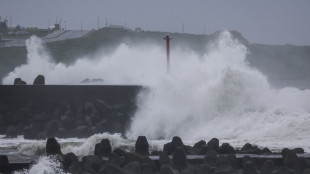
UN warns world to prepare for El Nino extreme weather / Photo: MARTIN BERNETTI - AFP
There is an 80-percent chance of the warming El Nino phenomenon developing between June and August, increasing the risk of extreme weather events, the World Meteorological Organization said Tuesday.
"Fuelled by unusually warm ocean waters in the tropical Pacific, El Nino conditions are developing and are set to influence global temperature and rainfall patterns," the United Nations' WMO weather and climate agency said.
Forecasts from the WMO global network "indicate a pronounced shift toward El Nino conditions, with probabilities reaching 80 percent for June-August", the Geneva-based organisation said.
El Nino is a natural climate phenomenon that warms surface temperatures in the central and eastern equatorial Pacific Ocean, bringing worldwide changes in winds, pressure and rainfall patterns.
It typically takes place every two to seven years and lasts around nine to 12 months.
Conditions oscillate between El Nino and its opposite La Nina, with neutral conditions in between.
The likelihood of El Nino developing by November is "near or above 90 percent", and most forecast models suggest it will be "at least moderate -- and possibly strong", the WMO said in its quarterly El Nino/La Nina update.
WMO chief Celeste Saulo said the world needed to get ready for an El Nino which could "exacerbate drought and heavy rainfall and increase the risk of heatwaves both on land and in the ocean".
The WMO says that even a moderate El Nino makes some weather and climate extremes more likely.
The last El Nino contributed to making 2023 the second-hottest year on record and 2024 the all-time high at around 1.55C above the 1850-1900 pre-industrial average.
- 'Urgent climate warning': Guterres -
In late April to mid-May, the sea-surface temperature in the central-eastern Equatorial Pacific -- the area used as a monitoring reference -- was approaching El Nino thresholds, the WMO said, with sub-surface temperatures more than 6C above average.
Meanwhile, the Southern Oscillation Index -- the atmospheric component of El Nino -- is also consistent with the phenomenon developing.
The WMO said there was no evidence that climate change increases the frequency or intensity of El Nino events.
However, the agency believes it can amplify the associated effects, because a warmer ocean and atmosphere increase the availability of energy and moisture for extreme weather events, such as heatwaves and heavy rainfall.
"El Nino is arriving on our doorstep," UN chief Antonio Guterres said in a video message.
"The world must treat it as the urgent climate warning it is. El Nino conditions will pour fuel on the fire of a warming world.
"The only effective response is climate action equal to the crisis -- ending the addiction to fossil fuels, accelerating the shift to renewables, protecting the most vulnerable, and delivering early warning systems for all."
Saulo said 128 countries now have multi-hazard early-warning systems in place, with the UN target being universal coverage by the end of 2027.
- Temperatures above normal -
While El Nino typically peaks between November and February, the resulting spike in temperatures typically comes later down the line.
Next month's forecast is likely to be more accurate as to the onset of El Nino and its strength.
The WMO said that for June to August, forecasts project "a nearly universal dominance of above normal temperatures in nearly all parts of the globe".
This increases the risk of compounding hazards in some regions and accelerating the onset of drought conditions where rainfall is reduced, it said.
Saulo said El Nino would have "cascading impacts", with a warming ocean in the tropics resulting in effects on global trade.
These go from "variability of the climate, into the economy and security of the people. That's why this information is so relevant and so important", she told reporters.
The WMO hopes advance warning will guide preparedness, especially in climate-sensitive sectors like agriculture, water management, energy and health.
Regional climate centres are predicting "below-normal" rainfall during the critical June-September rainy season in the northern Greater Horn of Africa; below-average monsoon rainfall in south Asia; and drier and warmer summer conditions in central America.
During the northern hemisphere summer, warm waters associated with El Nino can fuel hurricanes in the central and eastern Pacific, while hindering their development in the Atlantic Ocean.
V.Nemec--TPP