The Prague Post - Canada tries to adapt to a future of wildfires

EUR -
AED 4.118085
AFN 72.327475
ALL 90.580734
AMD 404.578149
ANG 2.00694
AOA 1028.259752
ARS 1712.747989
AUD 1.598703
AWG 2.021198
AZN 1.903137
BAM 1.954737
BBD 2.257372
BDT 138.614608
BGN 1.959896
BHD 0.422928
BIF 3361.771555
BMD 1.12133
BND 1.431721
BOB 13.174834
BRL 5.665411
BSD 1.12079
BTN 106.199765
BWP 15.396626
BYN 3.314197
BYR 21978.070272
BZD 2.254074
CAD 1.570614
CDF 2597.000736
CHF 0.920786
CLF 0.028087
CLP 1105.418227
CNY 7.488298
CNH 7.481834
COP 3575.349861
CRC 511.47164
CUC 1.12133
CUP 26.89837
CVE 110.197694
CZK 24.281841
DJF 199.581449
DKK 7.474596
DOP 68.775847
DZD 151.142973
EGP 62.00673
ERN 16.819952
ETB 183.578653
FJD 2.508639
FKP 0.838026
GBP 0.837129
GEL 2.903798
GGP 0.838026
GHS 12.989935
GIP 0.838026
GMD 82.978397
GNF 9919.604792
GTQ 8.565303
GYD 234.442488
HKD 8.793319
HNL 30.086636
HRK 7.534896
HTG 146.849475
HUF 366.175937
IDR 20248.250369
ILS 3.491152
IMP 0.838026
INR 106.312468
IQD 1699.075884
IRR 2054697.270937
ISK 136.19673
JEP 0.838026
JMD 177.933223
JOD 0.79498
JPY 175.966951
KES 145.61615
KGS 98.059312
KHR 4559.377873
KMF 492.842984
KPW 1009.197061
KRW 1485.594095
KWD 0.348038
KYD 0.933992
KZT 502.066929
LAK 25227.279049
LBP 100365.711751
LKR 372.037651
LRD 191.095212
LSL 18.485046
LTL 3.310997
LVL 0.678282
LYD 7.180095
MAD 11.000817
MDL 20.129052
MGA 5082.235805
MKD 61.586768
MMK 2355.184548
MNT 4036.851961
MOP 9.051777
MRU 44.786641
MUR 52.713464
MVR 17.335666
MWK 1943.442974
MXN 20.998112
MYR 4.579406
MZN 71.602163
NAD 18.485046
NGN 1492.434425
NIO 41.247566
NOK 10.457865
NPR 169.903923
NZD 1.969269
OMR 0.431087
PAB 1.12079
PEN 3.850406
PGK 5.01927
PHP 71.105777
PKR 310.203282
PLN 4.377565
PYG 6426.504666
QAR 4.096754
RON 5.3474
RSD 117.507568
RUB 91.832024
RWF 1656.499041
SAR 4.209702
SBD 9.054269
SCR 15.747974
SDG 674.478168
SEK 11.115
SGD 1.432353
SHP 0.83797
SLE 25.734597
SLL 23513.736798
SOS 640.551608
SRD 42.217519
STD 23209.269443
STN 24.486682
SVC 9.806666
SYP 14579.533814
SZL 18.482947
THB 37.822525
TJS 10.305503
TMT 3.935869
TND 3.340268
TOP 2.699893
TRY 55.772268
TTD 7.605863
TWD 36.560186
TZS 2965.91809
UAH 50.505031
UGX 4802.388013
USD 1.12133
UYU 44.935159
UZS 13345.741339
VES 986.533792
VND 28976.852191
VUV 133.357612
WST 3.100149
XAF 655.957
XAG 0.020789
XAU 0.000279317907
XCD 3.03045
XCG 2.019901
XDR 0.792839
XOF 655.957
XPF 119.331742
YER 264.744902
ZAR 18.51282
ZMK 10093.325175
ZMW 22.499763
ZWL 361.06784
SSP 6442.957706
MXV 2.370051
  • RBGPF

    -1.1000

    70.15

    -1.57%

  • CMSC

    -0.0700

    19.6

    -0.36%

  • RYCEF

    -0.3500

    17

    -2.06%

  • BCE

    0.8300

    20.81

    +3.99%

  • NGG

    1.8600

    82.64

    +2.25%

  • VOD

    0.2700

    16.12

    +1.67%

  • BCC

    2.7000

    78.29

    +3.45%

  • RIO

    -2.7800

    84.14

    -3.3%

  • CMSD

    -0.0250

    19.6

    -0.13%

  • RELX

    1.4900

    40.62

    +3.67%

  • GSK

    1.1900

    51.21

    +2.32%

  • AZN

    4.1200

    172.57

    +2.39%

  • BP

    0.2000

    50.05

    +0.4%

  • BTI

    1.5700

    60.47

    +2.6%

  • JRI

    0.0600

    10.68

    +0.56%

Canada tries to adapt to a future of wildfires
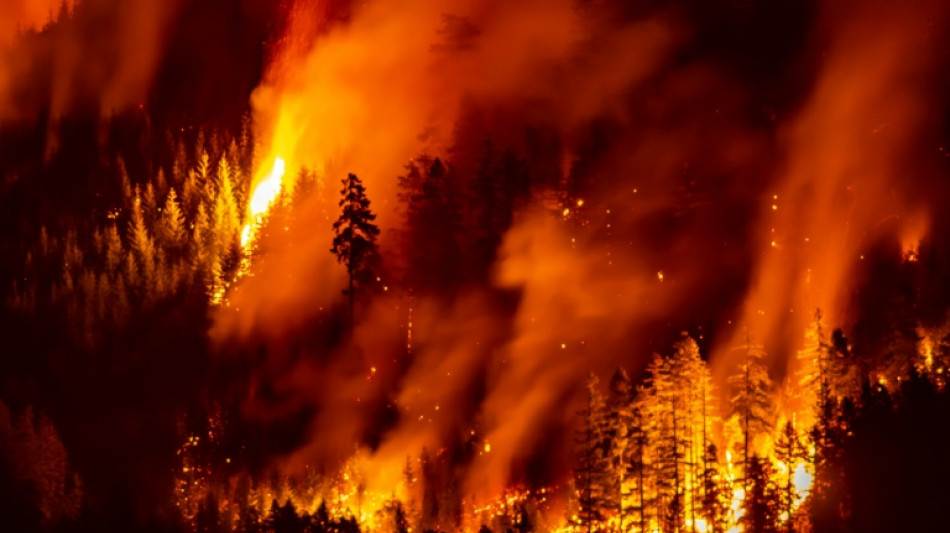
Canada tries to adapt to a future of wildfires / Photo: Colby Rex O'Neill - AFP

Canada tries to adapt to a future of wildfires

Faced with another summer when wildfires have scorched millions of hectares of land and blankets of smoke have disrupted daily life nationwide, Canada is trying to limit the annual devastation.

Text size:

Yet, despite procuring new water bombers and deploying forest management strategies to protect populated areas, experts caution that intense wildfires will remain a fixture of Canadian life.

"We're going to have to live with this," said Normand Lacour, who spent decades at Quebec's wildfire prevention and detection organization (SOPFEU).

Canada is home to about a quarter of Earth's boreal forest area and average annual temperatures in the country are increasing roughly twice as fast as the global average.

That makes conditions in Canada particularly "conducive to intense and very extensive forest fires," University of Ottawa geography professor Patricia DeRepentigny told AFP.

Canada's last three wildfire seasons have been among the 10 worst on record, including the devastating summer of 2023 when 18 million hectares (44.5 million acres) were torched, an area nearly as large as Syria.

This summer is not currently on track to approach that historic toll, with 4 million hectares burned so far, but the damage has been widespread.

In the western province of British Columbia, 15,000 people have been ordered to evacuate their homes, while residents of major eastern population centers like Toronto endured some of the world's worst air quality last month.

- Changing methods -

Canada's emerging response is broad-based.

The federal government has invested CAD$317 million (US$227 million) over five years "to establish a new national aerial firefighting surge capacity," Ottawa announced in May.

The money is being used to lease 10 aircraft capable of confronting wildfires, to be dispatched to provinces facing intensifying blazes.

Ottawa is also backing a CAD$150 million program that aims to clear flammable material such as vegetation from populated areas.

Provinces have also beefed up their firefighter capacity, including in Quebec where SOPFEU staffing levels are up 40 percent.

But, when it comes to protecting people from wildfires, "Canada is not in an excellent position," said Ryan Ness, the director of adaptation research at the Canadian Climate Institute.

There are "too many communities that are in areas that are exposed to wildfires that continue to develop," he told AFP.

- Fire clouds -

Canada is also extremely vulnerable to "fire clouds," or pyrocumulonimbus clouds, immense blazes that create their own wind and even lightning that can spark fresh fires.

The phenomenon, a consequence of the more frequent heat waves caused by climate change, was once rare in Canada, but that is changing.

Fire clouds were recorded 140 times in Canada in 2023, compared with once or twice a year historically, DeRepentigny said.

Fire clouds are unpredictable and can spread at staggering speeds. Battling them is a near-impossible challenge.

"There's not much we can do when this happens, apart from pulling crews out of the field and repositioning them behind the fire," said SOPFEU meteorologist Claudia Vaillancourt.

S.Janousek--TPP