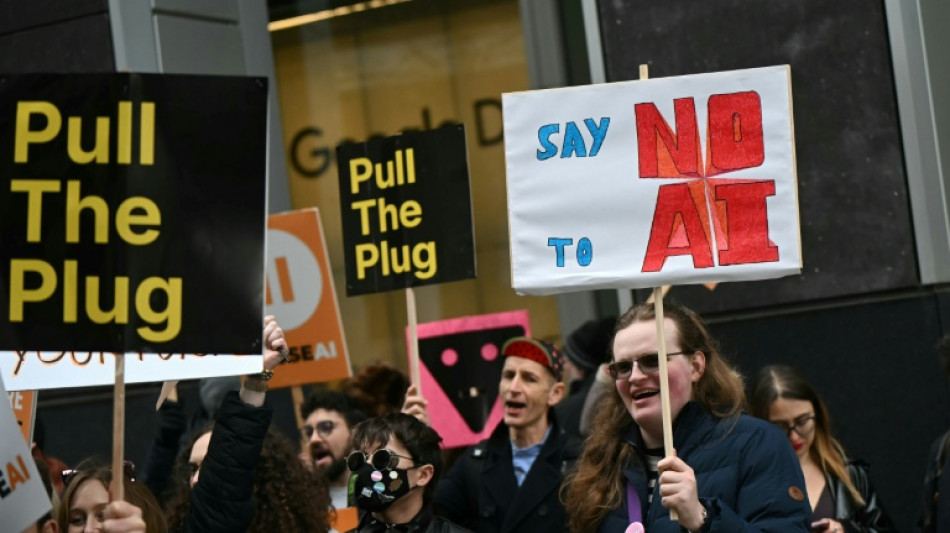
AI not hitting European jobs for now: ECB / Photo: JUSTIN TALLIS - AFP
Artificial intelligence has only had minor effects on employment in Europe so far, European Central Bank economists said Wednesday, but they warned the technology's future impact was uncertain.
Comparing 3,500 firms, some of which reported using AI and some of which did not, the economists overall found no difference in terms of creating or cutting jobs.
Firms that use AI particularly frequently were in fact four percent likelier to hire new staff than average, the economists said in a blog post.
"As things stand, based on firms' overall hiring plans, investment in and the intensive use of AI are not yet replacing jobs," they said.
"In fact, some firms are hiring additional employees -- perhaps because they are looking to develop and implement AI technologies while maintaining their existing production processes, or because AI is a way to help them scale up more quickly," they added.
The economists warned that firms that invested in AI with the aim of cutting jobs did indeed end up doing so, suggesting there could be profound effects on jobs as the technology matures.
"However, only 15 percent of firms that use AI cite reducing labour costs as a factor, and this is insufficient to offset the overall positive effects observed to date," they said.
Concern has grown that AI could have profound effects on employment, and firms including American tech giant Amazon and German insurer Allianz have cited AI-uptake as a reason for job cuts in recent months.
Markets tumbled last week after a viral blog post described a gloomy scenario in which AI led to mass layoffs, depressing economic growth.
The ECB economists warned that the limited effects seen to date might continue in the future.
"AI has not yet significantly transformed production processes," they said.
"Given that this is set to change, the longer-term impact of AI on employment remains less clear."
C.Novotny--TPP