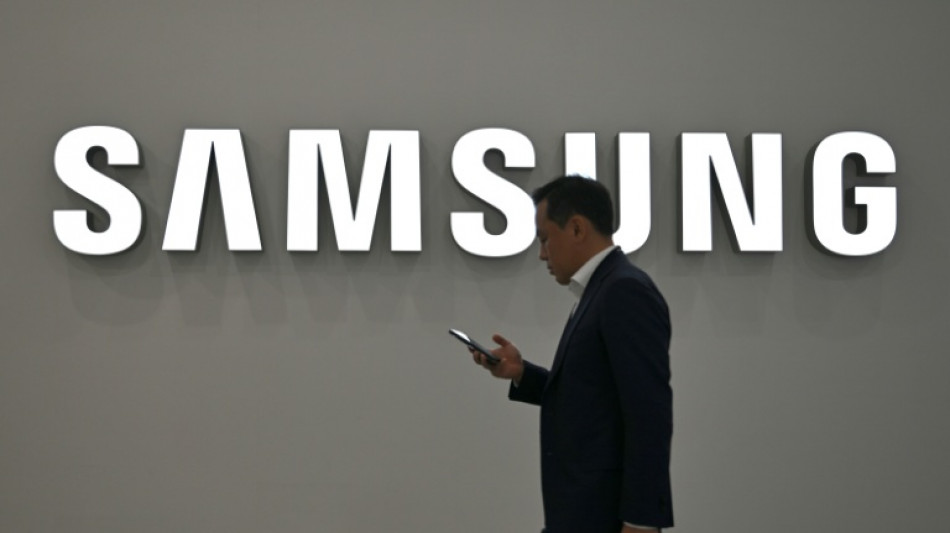
Union calls strike at S. Korea chip giant Samsung Electronics / Photo: Jung Yeon-je - AFP/File
The labour union at South Korean chip giant Samsung Electronics said Wednesday it would launch a planned strike after talks over bonus payouts collapsed.
The walkout, set to begin Thursday, is expected to dwarf a 2024 strike that drew about 6,000 workers at the world's top memory chipmaker.
Samsung's chips are used in everything from artificial intelligence to consumer electronics, raising the prospect that the strike could cause severe disruption and losses.
The tech giant's shares have surged nearly 400 percent over the past year on the back of an AI boom, and the workers are demanding the firm share some of its record profits as a bonus with them.
The union had demanded that, among other things, Samsung scrap a bonus cap set at 50 percent of annual salaries, allocate 15 percent of annual operating profit to bonuses.
The dispute has raised alarm in South Korea, where semiconductors account for roughly 35 percent of exports and are a key pillar of the economy.
According to the union's lawyer, around 50,500 workers are set to walk off production lines for 18 days from Thursday following the breakdown of negotiations with management.
"Around 10:00 pm on May 19, the labor union agreed to the mediation proposal put forward by the National Labor Relations Commission; however, management expressed its refusal," it said in a statement on Wednesday.
"The labour union will lawfully commence a general strike tomorrow as scheduled."
Samsung's management said the talks failed because "acceding to the labour union's excessive demands would risk undermining the fundamental principles of the company's management".
"Under no circumstances should a strike take place," it said.
Concerns are growing within the South Korean government that a prolonged union strike could hurt the export-driven economy, with chips making up about 35 percent of exports.
If the strike goes ahead, "the economic damage we would face would be unimaginable," Prime Minister Kim Min-seok warned Sunday.
Some experts say even a partial halt in Samsung's operations could prove damaging -- though the union argues that production stoppages have already occurred in the past for reasons related to maintenance and equipment inspections.
The government could invoke emergency mediation powers -- a measure that could halt strikes or other industrial action and trigger mediation if they are deemed a threat to the national economy.
- AI boom -
Samsung is a major producer of chips used in everything from artificial intelligence to consumer electronics, raising the prospect that the planned strike could cause severe disruption and losses.
The company said this year it had begun mass production of next-generation high-bandwidth memory chips, HBM4, seen as a key component for scaling up the vast data centres needed for AI development.
The dispute unfolds against the backdrop of an AI boom that is benefiting South Korean tech groups, boosting national growth and the stock market.
The company's shares surged 400 percent over the past year, while its domestic rival SK hynix -- another giant in memory chips -- jumped approximately 780 percent.
Samsung Electronics' market capitalisation crossed the $1 trillion mark for the first time in early May.
Both groups posted record profits in the first quarter, driven by global demand for AI chips.
Long staunchly anti-union, founder Lee Byung-chul once vowed never to allow unions "until I have dirt over my eyes".
He died in 1987. Samsung Electronics' first labour union was formed in the late 2010s.
R.Rous--TPP