The Prague Post - Recovery of ship traffic in Hormuz limited, but signs emerge

EUR -
AED 4.25674
AFN 73.599881
ALL 94.63924
AMD 426.786562
ANG 2.075229
AOA 1063.46406
ARS 1665.300658
AUD 1.638954
AWG 2.086353
AZN 1.969454
BAM 1.953264
BBD 2.335667
BDT 142.356387
BGN 1.959874
BHD 0.437095
BIF 3466.823235
BMD 1.159085
BND 1.485671
BOB 8.042557
BRL 5.900671
BSD 1.159694
BTN 109.603686
BWP 15.538824
BYN 3.210631
BYR 22718.066
BZD 2.332372
CAD 1.626057
CDF 2689.07734
CHF 0.919496
CLF 0.026086
CLP 1026.67098
CNY 7.832459
CNH 7.834968
COP 3981.456975
CRC 528.214147
CUC 1.159085
CUP 30.715753
CVE 110.518845
CZK 24.111344
DJF 205.992431
DKK 7.460034
DOP 67.922316
DZD 154.018025
EGP 57.847843
ERN 17.386275
ETB 183.570112
FJD 2.589049
FKP 0.862506
GBP 0.865176
GEL 3.065779
GGP 0.862506
GHS 13.094994
GIP 0.862506
GMD 84.612839
GNF 10173.867447
GTQ 8.839599
GYD 242.585018
HKD 9.08142
HNL 30.944321
HRK 7.534628
HTG 151.453347
HUF 348.47849
IDR 20572.136031
ILS 3.386568
IMP 0.862506
INR 109.312724
IQD 1518.40135
IRR 1593741.874933
ISK 144.109074
JEP 0.862506
JMD 183.411851
JOD 0.821813
JPY 185.758438
KES 150.124896
KGS 101.361707
KHR 4650.820524
KMF 492.610907
KPW 1043.176906
KRW 1752.38004
KWD 0.357112
KYD 0.966445
KZT 565.540801
LAK 25534.642323
LBP 103796.061813
LKR 388.508897
LRD 211.127136
LSL 18.771217
LTL 3.422477
LVL 0.701119
LYD 7.38919
MAD 10.715761
MDL 20.236724
MGA 4868.156941
MKD 61.531925
MMK 2433.437481
MNT 4146.424702
MOP 9.356651
MRU 46.456179
MUR 54.627955
MVR 17.919737
MWK 2012.171858
MXN 19.925262
MYR 4.711454
MZN 74.067971
NAD 18.779399
NGN 1575.335201
NIO 42.434218
NOK 11.018784
NPR 175.364787
NZD 1.99289
OMR 0.445666
PAB 1.159694
PEN 3.95539
PGK 5.085775
PHP 69.977449
PKR 322.571254
PLN 4.227959
PYG 7076.811199
QAR 4.219652
RON 5.224038
RSD 117.149943
RUB 84.580225
RWF 1724.71848
SAR 4.348764
SBD 9.343876
SCR 16.360628
SDG 696.029758
SEK 10.897891
SGD 1.485981
SHP 0.865374
SLE 28.687692
SLL 24305.437155
SOS 662.425802
SRD 43.270992
STD 23990.719317
STN 24.804419
SVC 10.146912
SYP 128.116096
SZL 18.773561
THB 37.710252
TJS 10.750241
TMT 4.068388
TND 3.374966
TOP 2.790799
TRY 53.683879
TTD 7.877771
TWD 36.578986
TZS 3042.601568
UAH 51.937311
UGX 4290.429144
USD 1.159085
UYU 46.819612
UZS 13914.81526
VES 690.856847
VND 30514.07171
VUV 138.224161
WST 3.175562
XAF 655.106385
XAG 0.01639
XAU 0.000266
XCD 3.132486
XCG 2.090068
XDR 0.815645
XOF 654.883233
XPF 119.331742
YER 276.586687
ZAR 18.740584
ZMK 10433.149863
ZMW 20.497385
ZWL 373.224897
  • CMSC

    0.0150

    22.38

    +0.07%

  • RBGPF

    0.0000

    62.87

    0%

  • CMSD

    0.0400

    22.3

    +0.18%

  • NGG

    -1.1000

    81.18

    -1.36%

  • RIO

    -2.0300

    103.71

    -1.96%

  • RELX

    -0.3950

    32.405

    -1.22%

  • VOD

    -0.2800

    14.61

    -1.92%

  • BCE

    -0.3000

    23.52

    -1.28%

  • JRI

    -0.0900

    12.72

    -0.71%

  • GSK

    0.1150

    52.335

    +0.22%

  • BP

    -0.8500

    40.3

    -2.11%

  • AZN

    -0.1400

    178.57

    -0.08%

  • BTI

    -1.6700

    59.71

    -2.8%

  • RYCEF

    0.1200

    18.75

    +0.64%

  • BCC

    0.4750

    72.035

    +0.66%

Recovery of ship traffic in Hormuz limited, but signs emerge
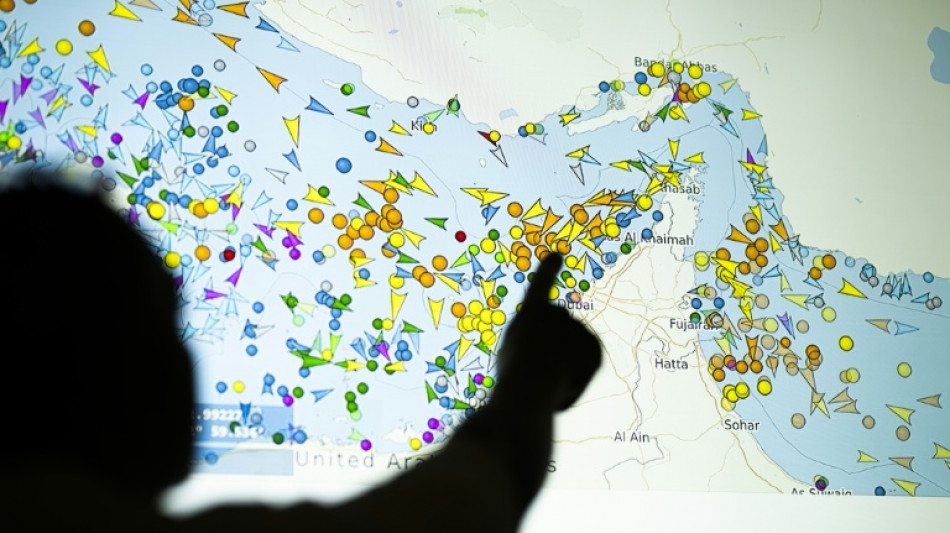
Recovery of ship traffic in Hormuz limited, but signs emerge / Photo: - - AFP

Recovery of ship traffic in Hormuz limited, but signs emerge

Maritime traffic in the Strait of Hormuz remains at levels before the Iran-US agreement, says the Kpler maritime tracking platform, but there are signs of recovery ahead of Friday's official reopening.

Text size:

Eight ships carrying raw materials transited the strait on Monday, and six on Tuesday, according to Kpler data updated Wednesday. The agreement was reached overnight Sunday.

This rate is comparable to the previous week, which saw an average of eight transits per day.

That is well down on the rate of approximately 120 transits per day before the war, according to the maritime information website Lloyd's List.

A fifth of global hydrocarbon exports passed through the strait, as well as other essential raw materials.

In a sign of a less hostile climate in the area, several oil tankers in Iran's shadow fleet, all under international sanctions, reactivated their transponders on Tuesday and Wednesday.

They had been switched off for months to evade maritime surveillance.

The Amber, Diona, Sonia I, Starla, Tour 2 and Hero II, were among the vessels to have turned off the transponders, according to the MarineTraffic platform.

These ships had loaded oil on Kharg Island and left the Gulf through the Strait of Hormuz during the conflict, with their transponders switched off, according to Kpler.

Most of them have resumed transmitting AIS signals from the Iranian port of Chabahar, located at the mouth of the Gulf of Oman, about 500 km east of the Strait of Hormuz, near the Afghan border.

- Normal traffic will take time -

While the legal framework of the deal remains unclear, the almost simultaneous reactivation of the transponders on these vessels suggested that their operators were acting in concert, MarineTraffic said Wednesday.

Some of these tankers had crossed the perimeter of the US blockade, imposed in mid-April in response to Iran's de facto blocking of the Strait of Hormuz, according to the maritime tracking website TankerTrackers.

Tehran claimed on Tuesday that the US blockade had been lifted, but there has been no confirmation from Washington at this stage.

The US and Iran will sign their memorandum of understanding in Switzerland on Friday to end the war in the Middle East, marking the start of two months of negotiations, with the long-awaited reopening of the Strait of Hormuz agreed as the first step.

US President Donald Trump announced a full reopening of the strait following the signing.

But it will take time for maritime traffic to return to normal, according to a European maritime industry source.

"Ports will be congested... and everyone will have to wait one's turn," he warned.

"The whole logistical chain has to be reorganised."

A.Slezak--TPP