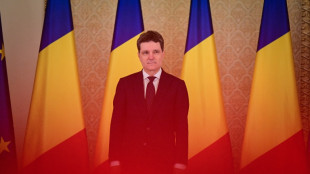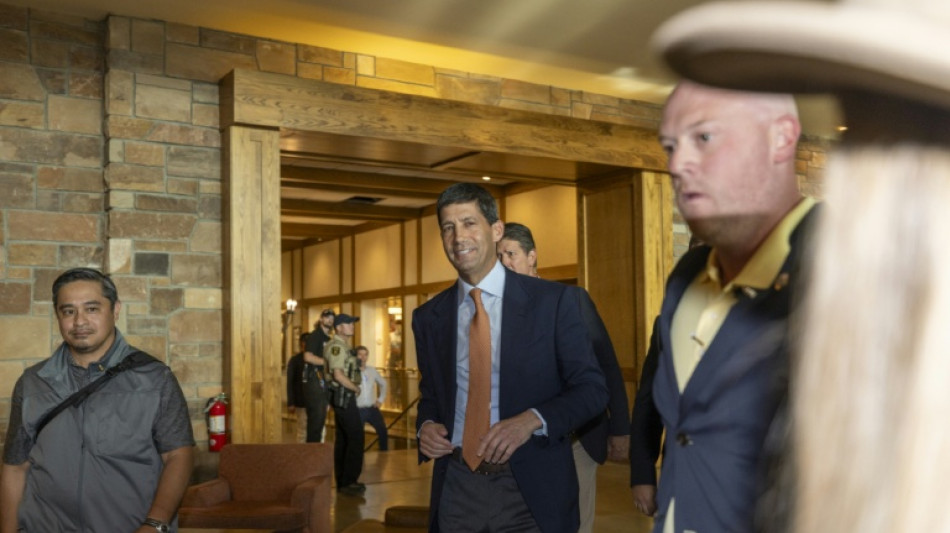
Fed chair Warsh flags high US inflation as 'concerning' / Photo: NATALIE BEHRING - GETTY IMAGES NORTH AMERICA/AFP
US Federal Reserve chair Kevin Warsh on Friday offered rare insight into his economic outlook, flagging that high inflation in the world's largest economy was "concerning" and saying that he saw current interest rates as not being "restrictive."
Warsh, appointed by US President Donald Trump and in office since May, was kicking off a key central banking meeting in Jackson Hole, Wyoming -- a storied venue for monetary policy watchers.
"On the price-stability side of our mandate, the numbers are more concerning," said Warsh, according to prepared remarks shared with AFP.
He added that he would be "hard pressed" to describe current financial conditions as "restrictive," a potential hint that interest rate hikes could be on the horizon.
The US central bank has missed its long-term two-percent target for inflation for more than five years, with the latest measure of the Fed's preferred gauge coming in at 3.7 percent this week.
Warsh, who has been reticent to share his views on the economy since he took office, said that the central bank's "predominant focus right now should be on prices."
"We must be confident that underlying inflation is moving to our objective, clearly and at sufficient speed. Otherwise, we have work to do," he said.
The Fed has held rates steady through 2026, but a growing faction of policymakers has called for interest rate hikes to combat inflation fueled by US President Donald Trump's war on Iran and his tariff policies.
At its last meeting in July, the Fed once again held rates, but a quarter of voting members on the rate-setting committee dissented, calling for an immediate hike.
- 'Impressed' -
Warsh had positives to note elsewhere in his economic outlook, however.
"Today I am impressed by the overall performance of the economy, which appears to have strengthened," he said, noting metrics in business capital expenditures, corporate earnings and consumer spending.
The Fed has a dual mandate to keep long-term inflation to its two-percent target while also delivering maximum employment.
Unemployment has remained relatively steady in the United States over the last year, despite seesawing job growth numbers -- mainly due to demographic shifts driven by an aging population and lower net immigration.
"On the employment side of the Fed's dual mandate, our country is doing well," said Warsh, noting he believed the current unemployment level of 4.1 percent was "consistent with full employment."
Warsh also spoke of the effects of artificial intelligence technology on the US economy, calling the current moment "a hinge point in history."
The central bank has been investigating the effect of AI on productivity and jobs through a task force formed by Warsh after he took office earlier this year.
Notably, Fed Chair Warsh's speech made no mention of the central bank's independence, which has been under unprecedented attack by US President Trump since the latter took office last year.
Earlier this month, Trump renewed his attempts to fire Fed Governor Lisa Cook, and he frequently insulted and criticized Warsh's predecessor Jerome Powell as he demanded lower interest rates -- despite high inflation.
Ahead of Warsh's speech, analysts told AFP that markets were craving concrete guidance from Warsh on how he saw the US economy and the potential path forward for interest rates.
Since taking office, Warsh has been adamant about saying less, not more.
He has refrained from giving guidance on the direction interest rates may take in the world's largest economy, and refused to share his views on the economic outlook or how surging inflation and other challenges should be tackled.
Friday's remarks offered a first look into his views on current levels of inflation, unemployment and financial conditions.
He stood firm, however, on offering less guidance and transparency about his thinking than his predecessors.
"Transparency in communications about future policy decisions is not a virtue unto itself," he said.
"I believe when policymakers make quasi-commitments on interest rates through the cycle, we inhibit our own freedom to make the right calls when it's time to decide."
E.Soukup--TPP