The Prague Post - Food crisis 'looming' after global energy shock, UN agriculture fund says

EUR -
AED 4.134297
AFN 73.173203
ALL 91.291163
AMD 406.964222
ANG 2.014844
AOA 1032.308779
ARS 1703.246227
AUD 1.617742
AWG 2.02775
AZN 1.938396
BAM 1.955628
BBD 2.267361
BDT 138.481516
BGN 1.967614
BHD 0.425774
BIF 3369.303787
BMD 1.125746
BND 1.440112
BOB 13.142728
BRL 5.724526
BSD 1.125731
BTN 106.844454
BWP 15.422507
BYN 3.390092
BYR 22064.622187
BZD 2.264101
CAD 1.593696
CDF 2604.411214
CHF 0.927085
CLF 0.028046
CLP 1103.805609
CNY 7.532588
CNH 7.525184
COP 3574.648914
CRC 511.568658
CUC 1.125746
CUP 27.017625
CVE 110.258245
CZK 24.328441
DJF 200.463267
DKK 7.476029
DOP 69.054542
DZD 151.38743
EGP 60.17224
ERN 16.88619
ETB 183.877401
FJD 2.552798
FKP 0.8493
GBP 0.844022
GEL 2.916054
GGP 0.8493
GHS 13.145728
GIP 0.8493
GMD 82.741348
GNF 9903.393258
GTQ 8.601473
GYD 235.52034
HKD 8.835283
HNL 30.220343
HRK 7.53439
HTG 147.418349
HUF 363.08518
IDR 20295.73745
ILS 3.482834
IMP 0.8493
INR 106.854123
IQD 1706.549969
IRR 2021701.967645
ISK 136.23761
JEP 0.8493
JMD 178.944268
JOD 0.798125
JPY 177.866191
KES 146.178116
KGS 98.44667
KHR 4575.557095
KMF 495.327903
KPW 1013.171383
KRW 1499.662904
KWD 0.349825
KYD 0.938109
KZT 509.428789
LAK 25329.32317
LBP 100807.841995
LKR 372.847157
LRD 191.933126
LSL 18.505066
LTL 3.324035
LVL 0.680952
LYD 7.229557
MAD 10.93693
MDL 20.195045
MGA 5066.464571
MKD 61.646223
MMK 2363.836759
MNT 4050.89541
MOP 9.100579
MRU 45.005243
MUR 53.169141
MVR 17.404245
MWK 1952.037056
MXN 20.694747
MYR 4.594506
MZN 71.904705
NAD 18.504573
NGN 1498.919501
NIO 41.427462
NOK 10.625438
NPR 170.945453
NZD 1.987567
OMR 0.432838
PAB 1.125691
PEN 3.872263
PGK 5.111687
PHP 70.910177
PKR 311.637407
PLN 4.370551
PYG 6429.434756
QAR 4.114838
RON 5.334464
RSD 117.438434
RUB 94.224552
RWF 1661.539166
SAR 4.224393
SBD 9.078745
SCR 15.635556
SDG 677.142806
SEK 11.146552
SGD 1.440037
SHP 0.849652
SLE 27.783393
SLL 23606.336326
SOS 643.337726
SRD 42.374773
STD 23300.669948
STN 24.498499
SVC 9.850397
SYP 14636.949527
SZL 18.49721
THB 37.612862
TJS 10.373634
TMT 3.951369
TND 3.358305
TOP 2.710526
TRY 55.754147
TTD 7.642362
TWD 36.47575
TZS 2974.78731
UAH 50.494706
UGX 4649.63253
USD 1.125746
UYU 45.317224
UZS 13571.168548
VES 989.430115
VND 29150.630572
VUV 134.455495
WST 3.130563
XAF 655.957
XAG 0.019476
XAU 0.0002696233
XCD 3.042385
XCG 2.028876
XDR 0.795961
XOF 655.957
XPF 119.331742
YER 265.844895
ZAR 18.498248
ZMK 10133.069844
ZMW 22.536818
ZWL 362.489762
SSP 6518.564885
MXV 2.336642
  • CMSC

    0.3750

    20.22

    +1.85%

  • BCC

    0.9900

    76.47

    +1.29%

  • RELX

    0.5400

    38.96

    +1.39%

  • RYCEF

    0.1300

    18.13

    +0.72%

  • NGG

    2.1000

    81.17

    +2.59%

  • VOD

    0.3600

    16.21

    +2.22%

  • BCE

    0.1750

    20.355

    +0.86%

  • JRI

    0.1200

    10.6

    +1.13%

  • AZN

    -0.8300

    165.85

    -0.5%

  • RBGPF

    0.0000

    71.5

    0%

  • GSK

    0.6400

    49.66

    +1.29%

  • BP

    0.9700

    49.41

    +1.96%

  • RIO

    1.0500

    91.26

    +1.15%

  • BTI

    1.4650

    59.465

    +2.46%

  • CMSD

    0.1900

    20.04

    +0.95%

Food crisis 'looming' after global energy shock, UN agriculture fund says
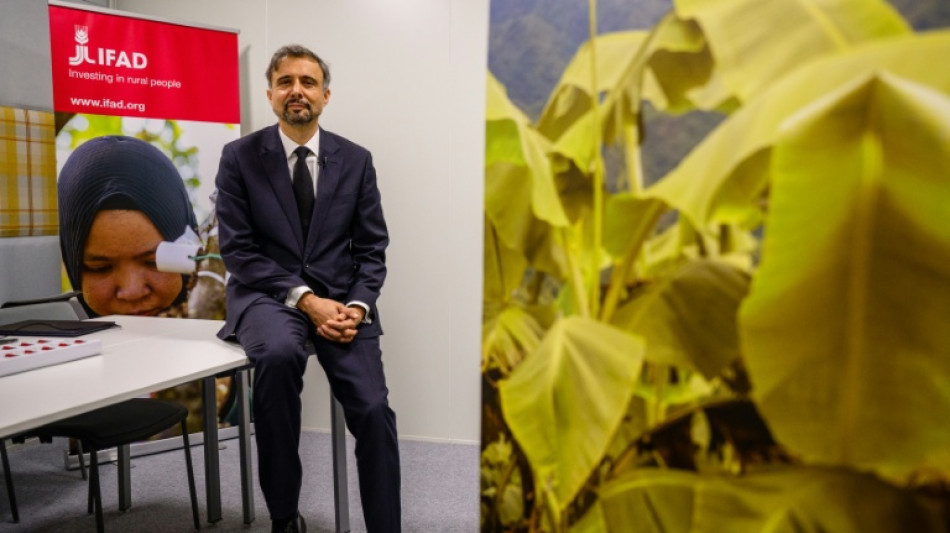
Food crisis 'looming' after global energy shock, UN agriculture fund says / Photo: ANTHONY WALLACE - AFP

Food crisis 'looming' after global energy shock, UN agriculture fund says

Rising energy and fertiliser costs are hitting smallholder farmers and driving up prices of agricultural commodities, fueling fears of a global food crisis, the head of the UN agriculture development fund told AFP.

Text size:

Global agricultural prices jumped 13 percent in the third quarter of the year, according to the International Fund for Agricultural Development (IFAD), which warned a "global food crisis is looming".

The surge in energy prices due to conflict in the Middle East has sparked a sharp increase in the cost of fertilisers and fuel this year, driving up agricultural production and transport costs.

"Over the next six to nine months, we will see continued increases related to food prices, but also I would say even inflation in terms of food, which will impact most of the populations that actually can afford it less," IFAD President Alvaro Lario told AFP in an interview on Tuesday.

Already, "almost one in three people in the world cannot afford a healthy diet", Lario said.

"So I think the costs of a healthy diet, which means an increased cost on legumes, on vegetables, on meat, is just having a big impact on what people can afford to consume."

Food insecurity affects around 260 million people worldwide, accord to UN figures.

Because food accounts for a significant portion of household budgets in developing countries, price hikes are felt acutely there, noted Lario, speaking on the sidelines of the International Monetary Fund and World Bank meetings in Bangkok.

Smallholder farmers -- who account for one-third of global food production, and up to 70 percent in many developing nations -- are the most severely affected by the energy shock, according to IFAD, and were especially vulnerable to rising fertiliser prices.

"In the very short term, there is very little that governments can do. They can subsidise, for example, the price of fertiliser input... or fuel through subsidies," he said.

G7 nations pledged on Thursday to mobilise $2.5 billion to assist countries at risk of food insecurity, with a specific focus on fertilisers.

Lario called for longer term solutions to address underlying vulnerabilities.

"The important lesson is that these shocks will continue over time. So the most important lesson is that actually we should be building the resilience for the next three to five years," he said.

"You need to diversify the type of value chains and crops that you are currently self-sufficient, and food security becomes now in many countries a matter of national security," he added.

Lario also flagged the impact of climate change on small-scale farmers, who received less than one percent of allocated global climate finance.

"It's very clear that farming... starts with soil health, and it starts with availability of water, and both are very much affected by climate change. What we need to really do is to try to attract investments... in climate adaptation," he said.

L.Bartos--TPP