Viral anti-vax posts weaponise Philippine inoculation fears / Photo: Ted ALJIBE - AFP/File
When Jenette Torres Odena's three-year-old son fell ill days after receiving a jab as part of a Philippine vaccination drive, his photograph quickly spread on Facebook alongside claims the inoculation had killed him.
Doctors found no link between the boy's condition and the measles-rubella vaccine, and he went on to fully recover, but by then his image had appeared in anti-vaccine videos viewed hundreds of thousands of times.
"I felt like crying," Odena told AFP.
"I kept praying for my son to recover and suddenly they were killing him on Facebook."
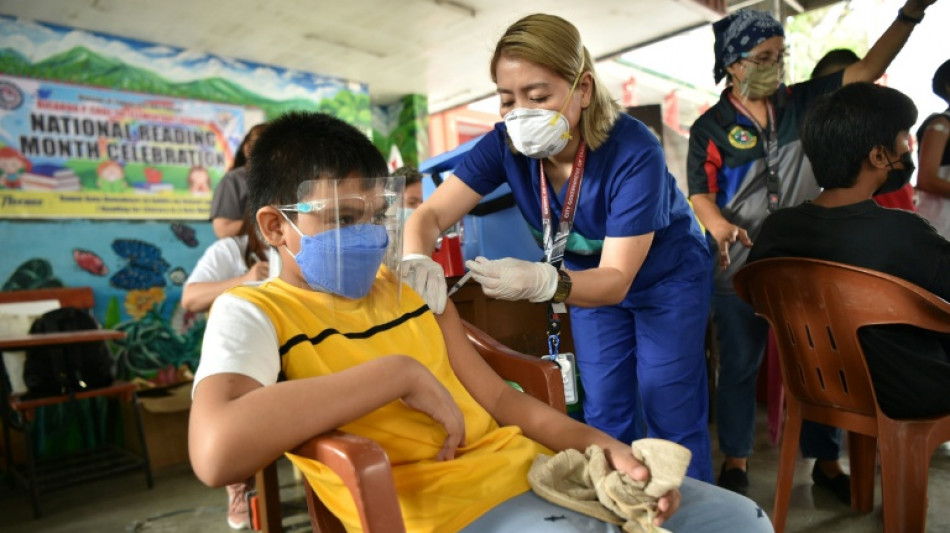
The videos were part of a wave of misinformation that accompanied a child vaccination campaign this year that saw more than seven million Filipinos inoculated. Some 230,000 declined the jab.
The Department of Health said concerns about side effects accounted for 66 percent of refusals and called misinformation spread by social media influencers a "major driver" of vaccine fear.
The Philippines has struggled to restore routine childhood immunisation rates after years of plummeting coverage, which contributed to a polio resurgence in 2019 and recurring measles outbreaks.
The claims circulated on social mediarecycled conspiracy theories that gained traction globally during the Covid-19 pandemic while tapping into lingering fears about vaccine safety after the botched rollout of a dengue vaccine in the Philippines a decade ago.
"Vaccine hesitancy should not simply be understood as a lack of scientific knowledge among the public," Daniel Fritz Silvallana, a health communication researcher at Deakin University, Australia, told AFP.
"In the Philippine context, it is also connected to questions of trust, politics, and people's previous experiences with vaccination and public health institutions," he said.
- 'Everyday slaughter' -
Within days of the photo of Odena's son being shared online, Facebook content creator Maharani Sona Shiloh had incorporated it into a video, framing it as evidence the vaccination campaign was harming children.
To bolster her claims, Shiloh cited Trump's recent controversial move to reduce the number of vaccine doses administered to American children.
Thevideo viewed hundreds of thousands of times paired the child's image with a photograph of US President Donald Trump and the words "Everyday slaughter".
Facebook, which did not reply to AFP requests for comment, eventually took down the page.
Three affiliated pages remain active.
Shiloh rejected suggestions she was spreading harmful misinformation, describing herself as a human rights advocate.
"People call us crazy," she told AFP. "Why is it that human beings don't have the right to challenge these things?"
The 44-year-old said she became involved in anti-vaccine advocacy years before the pandemic, later connecting with church groups and "advocacy circles" that also campaign against SIM card registration and other policies they associate with a treacherous "New World Order".
Videos posted by Shiloh, some with millions of views, claimed vaccines contained harmful substances including "human placenta" and "formalin", while warning the World Health Organization was trying to depopulate the planet.
One mother, who asked to speak anonymously to protect her children, told AFP she decided to hold off on vaccinating them after watching the videos.
"I watched Ms Maharani's videos because I was looking for more information. They gave additional knowledge... so it helped me to think more carefully," she said.
A week after the Facebook page was shuttered, she said she remained undecided about vaccinating her children, explaining that she and her husband worried about possible side effects.
- Rebuilding trust -
While Shiloh's claims quickly collapse under scientific scrutiny, vaccinologist Helen Petousis-Harris of the University of Auckland said such videos rely on fear rather than compelling evidence.
"Recognised vaccine ingredients become mysterious contaminants. Rare adverse events become brain damage, epilepsy, organ failure and death," she told AFP.
For health workers on the frontlines, however, the videos are increasingly difficult to ignore.
"They get scared because the vlog said vaccines are fatal," said Wenna Mae Belen, a rural health worker in Sorsogon province.
Conversations with some parents have also become hostile, Belen added.
"They tell me if something bad happens, they’ll make me suck the vaccines out of their kids' bodies."
While the 25-year-old said Facebook bore "major responsibility" for the spread of vaccine misinformation, she cautioned that picking fights with content creators like Shiloh and their followers was a losing battle.
Rebuilding trust will take time and patience, she said, calling for open, non-judgmental conversations with parents.
"It isn't enough for us to just say: 'We're the experts, so trust us'."
V.Nemec--TPP