US oil giants say it's early days on potential Venezuela boom / Photo: ALEX WONG - GETTY IMAGES NORTH AMERICA/AFP/File
ExxonMobil and Chevron said Friday that they were awaiting signs of greater fiscal and legal stability in Venezuela before significantly shifting their approach to the oil-rich country.
ExxonMobil, which has not operated in Venezuela since its assets were expropriated in 2007, aims to help the Trump administration understand the need to "make sure the right legal framework is in place" in Venezuela, said ExxonMobil CEO Darren Woods.
The comments came in parallel with the first round of oil giant earnings reports since the United States seized Venezuelan leader Nicolas Maduro in early January and took control of Venezuela's oil sector.
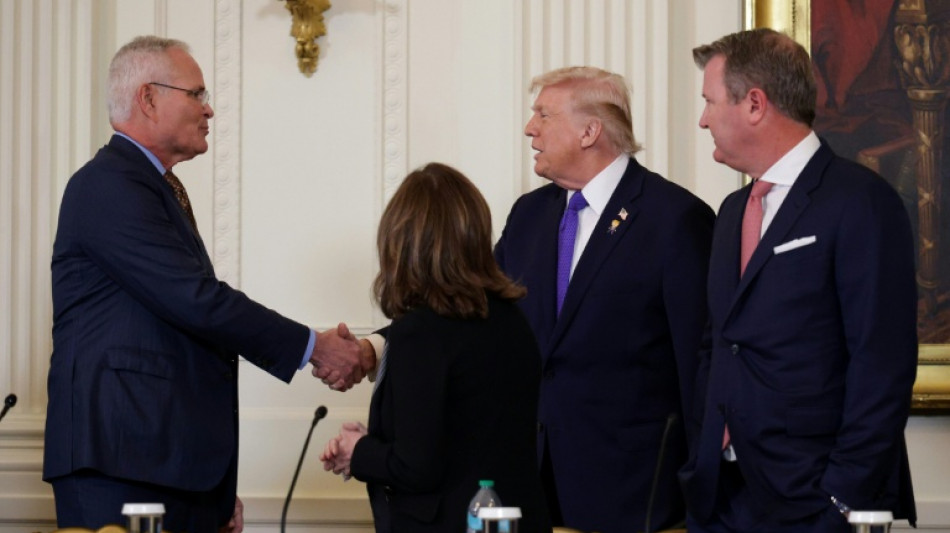
Woods' cautious message about doing business in Venezuela at a recent White House meeting had drawn jeers from President Donald Trump.
Trump told the January 9 White House meeting with executives from ExxonMobil, Chevron and other companies that he wanted them to rapidly rebuild the country's dilapidated oil industry and boost production by millions of barrels a day.
But Woods, recounting how the company had had assets seized twice by Venezuela, told Trump's meeting that the country was currently "uninvestable."
That comment did not sit well with Trump, who later accused the company of "playing too cute," and threatened to block ExxonMobil from doing business there.
On Friday, Woods said his comments at the White House were meant to communicate the "significant challenges that have to be addressed if we are going to achieve the priorities that the White House has," he told CNBC.
Woods also noted that Venezuela's unusually heavy crude is costly to develop but said ExxonMobil's experience producing similar sites in Canada made the company a logical partner in Venezuela.
- 'Stability' -
Chevron, the only US oil company that has continued to operate in Venezuela, believes the country "has the opportunity to become a more sizable part of our portfolio in the future," said CEO Mike Wirth on an conference call with analysts.
"But we also need to see stability in the country. We need to have confidence in the fiscal regime."
Chevron is producing more than 200,000 barrels per day in Venezuela and could grow volumes by up to 50 percent over the next 18-24 months, Wirth said.
While the company has been viewed as in pole position to benefit from the developments in Venezuela, Wirth said he would not deviate from weighing risks and opportunity in determining how much to invest.
"I try to remind people, like anywhere we invest, (that) fiscal terms, stability, regulatory predictability are important," said Wirth.
He said the company is reviewing a new Venezuela hydrocarbon law.
On Thursday, Venezuela's parliament adopted reforms that offer greater guarantees to private players, relinquishes state control of exploration, and lowers taxes.
"With the right changes, we certainly could see our operations and footprint expand in Venezuela," Wirth said.
- Earnings -
In terms of earnings, both companies reported lower profits due to lower crude prices, offset somewhat by increased production volumes.
ExxonMobil reported profits of $6.5 billion, down 14.6 percent from the same time last year.
Revenues were $82.3 billion, down 1.3 percent.
Chevron reported profits of $2.8 billion, down 14.5 percent from the year-ago period. Revenues dipped 10.2 percent to $46.9 billion.
Shares of ExxonMobil fell 1.1 percent shortly after midday, while Chevron climbed 1.5 percent.
D.Kovar--TPP