IOC to try to convince Ukrainian not to wear banned helmet / Photo: Tiziana FABI - AFP
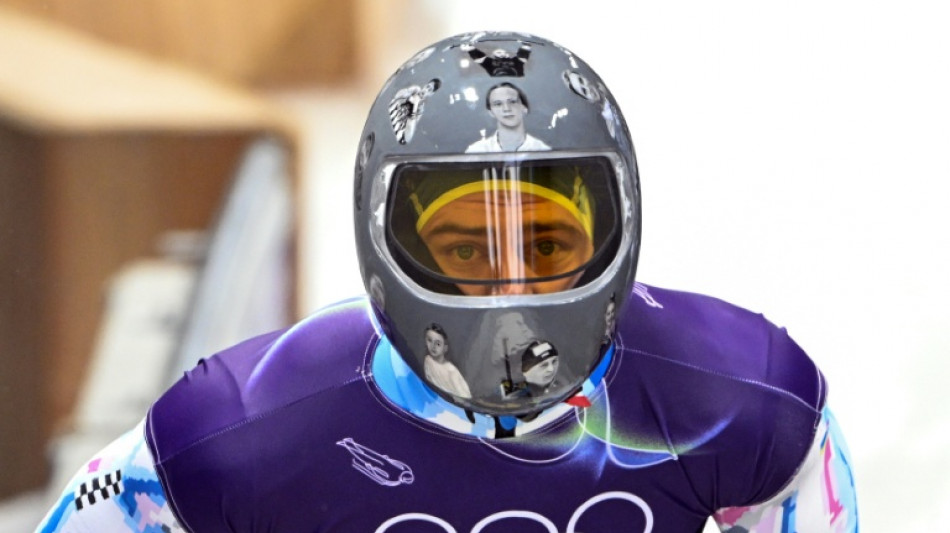
The International Olympic Committee will try to convince Ukrainian skeleton racer Vladyslav Heraskevych to not wear a banned helmet that depicts victims of the war with Russia at the Milan-Cortina Games, a spokesperson said Wednesday.
Heraskevych insisted on Tuesday that he would wear the helmet, which carries pictures of Ukrainian sportsmen and women killed since Russian forces invaded in 2022, during the men's skeleton heats on Thursday.
The gesture has been defended by Ukrainian President Volodymyr Zelensky but Heraskevych risks being disqualified as gestures of a political nature during competition are forbidden under the Olympic charter.
“We will contact him today, and we will reiterate the many, many opportunities that he has to express his grief," said IOC spokesperson Mark Adams.
Athletes are permitted to express their views in press conferences and on social media, and on Tuesday the IOC said it would "make an exception" for Heraskevych, allowing him to wear a plain black armband during competition.
"As we discussed before, he can do so on social media and press conferences in the mix, so we will try to talk to him about that and try to convince him," Adams added on Thursday.
"We want him to compete. We really, really want him to have his moment. That's very, very important."
However, Heraskevych has already said he has no intention of backing down and he was wearing it again in training at the Cortina Sliding Centre on Wednesday.
When asked about the risk of Vladislav Heraskevych's disqualification if he follows through on his statements, Adams said that the rules would be enforced.
"There are 130 conflicts going on in the world. You cannot have 130 different conflicts, however terrible they are, you cannot have them featured during the field of play, during the actual competition," he said.
"I'm not saying we have a solution or any solution for this, but I think here it's better for people to talk to people and for human interaction hopefully to win the day.
"But obviously there are rules and regulations, there are rules and regulations that the athletes themselves want to enforce, and they will ultimately be enforced."
Adams added that the current guidelines were agreed both by 4,500 athletes and IOC commissioners, saying: "This is what the athletes want."
C.Sramek--TPP