Multiple suicide bombers hit Nigeria's Maiduguri city after years of calm / Photo: - - AFP
Multiple explosions from suspected suicide bombers rocked the northeastern Nigerian city of Maiduguri Monday evening, police said, on the back of an overnight attack on a military post.
Combined with the attack on the military position the evening prior and a mosque bombing in December, the assaults have wrecked a yearslong peaceful stretch in the city, which had become a relative oasis of calm as Nigeria's long-running insurgency was pushed to the rural hinterlands.
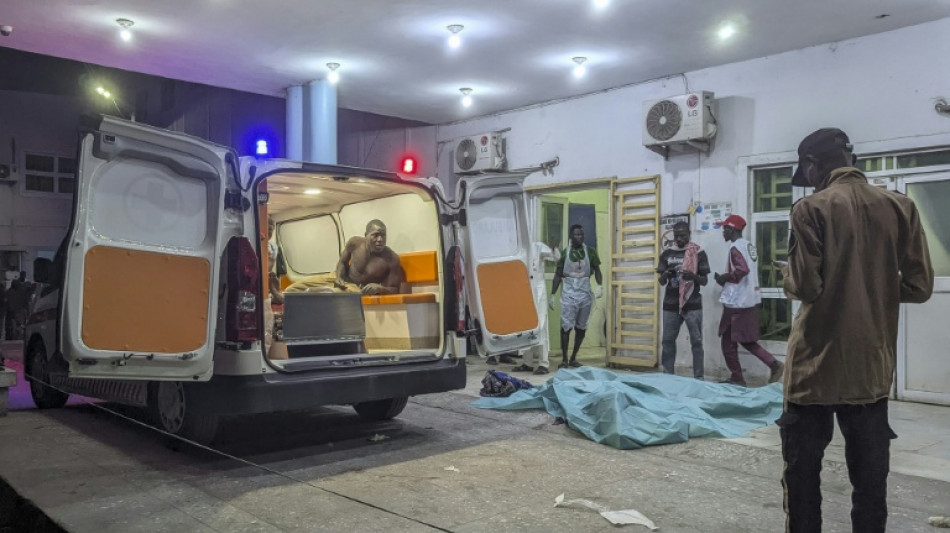
An AFP reporter at a city hospital saw dozens of wounded people seeking treatment from Monday's blasts, as well as multiple bodies covered by sheets on the sidewalk outside, though no death toll was immediately available.
"I heard a heavy explosion and later realized it was a bomb," Alhaji Bukar Grema, who owns a phone shop near one of the blast sites and helped evacuate the victims, told AFP.
Dauda Iliya, a media aide to the Borno State government, said authorities were working to confirm casualties from the explosions at the city's main market and the University of Maiduguri Teaching Hospital.
Idris Suleiman Gimba, who works with the National Blood Service Commission, said there was also a blast near the post office.
Borno state police said that explosives clearance teams were at the three scenes "following three suspected suicide bomb events."
Fighters from Boko Haram and rival jihadist group Islamic State West Africa Province (ISWAP) have recently stepped up attacks in northeastern Nigeria.
Their 16-year campaign to establish a caliphate in the country has killed more than 40,000 people and displaced around two million.
Borno State Governor Babagana Zulum called the apparent bombings "barbaric" and said "the recent surge in attacks is not unconnected with intense military operations in the Sambisa forest," a known jihadist stronghold.
Iliya called for "increased vigilance," especially as residents prepare to celebrate the end of Ramadan this week.
Roads leading to the site of the market blast were closed by security forces Monday evening, an AFP reporter saw.
The earlier attack was launched around midnight Sunday into Monday, on a Nigerian military post in Ajilari Cross district, a southwestern suburb of Maiduguri and just a few kilometres (miles) from the city's airport.
That same evening there was an attack in the Damboa local government area, south of Maiduguri.
Police said the overnight incidents followed "widespread reports of sporadic gunshots and explosions" and were a result of "attempted infiltrations by suspected" Boko Haram or ISWAP militants.
"In a swift and coordinated response, joint security operatives who were already on heightened alert engaged the insurgents and successfully repelled the attacks, forcing the terrorists to retreat," police spokesman Nahum Kenneth Daso said in a statement.
He said no casualties were recorded among the military or civilians in the earlier attacks, adding the insurgents were believed to have suffered casualties.
Residents reported four deaths on the attackers' side.
Resident Yakaka Ali Gana said: "This is the first time attackers have stormed our community and attacked the military base."
The military has yet to comment.
- Fragile calm ruptured -
Maiduguri, once the scene of daily shootings and bombings, had been relatively calm in recent years, with attacks peaking in the mid-2010s.
The last major attack dates back to 2021, when Boko Haram jihadists fired mortars at the city, killing 10 people.
But in December, an unclaimed bombing -- again a suspected suicide attacker -- killed at least seven people in a city mosque.
And in the countryside surrounding Maiduguri, violence has continued.
Last week, the army confirmed "coordinated attacks" on several military bases in the northeast, which killed at least 14 people, including 10 soldiers, according to local civilian and military sources.
Last month, the United States began deploying troops to Nigeria to provide technical and training support to the country's soldiers in fighting jihadist groups.
The US Africa Command said 200 troops were expected to join the deployment overall.
The deployment came after US President Donald Trump said the violence in Nigeria amounted to the "persecution" of Christians -- a framing long used by the US religious and political right wing.
Nigeria's government and many independent experts say Christians and Muslims alike are the victims of the country's violence.
strs-nro-sn/giv
K.Dudek--TPP