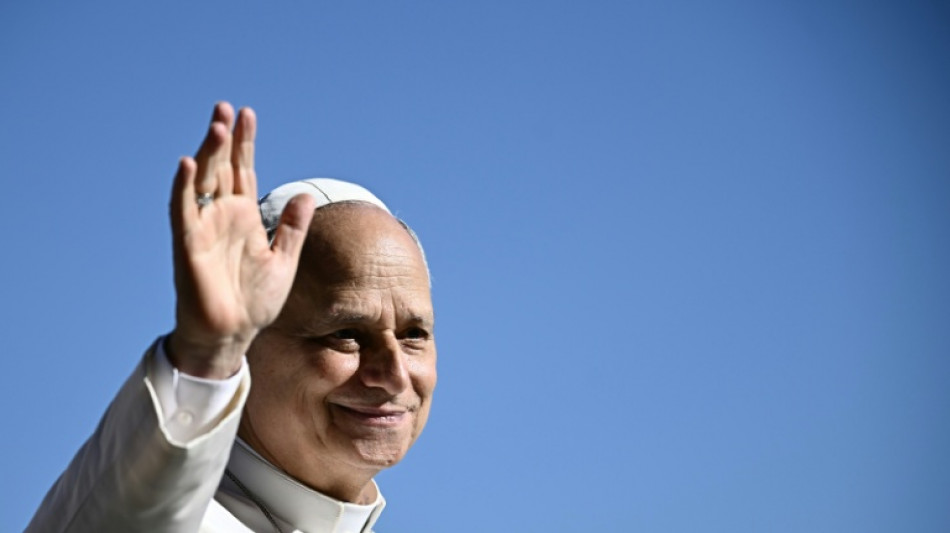
Packing for a pope: behind the scenes on foreign trips / Photo: Filippo MONTEFORTE - AFP
Papal trips mean vast crowds, high-level diplomatic meetings and a formidable amount of behind-the-scenes preparation, from delicately balanced agendas to complex security protection for the head of the Catholic Church.
Pope Leo XIV's visit to France from September 25 to 28, which includes events at the Notre-Dame Cathedral and the Champs-Elysees, will involve some 15,000 members of the security forces.
The groundwork for this visit -- the first papal trip to Paris since 2008 -- was laid well before it was officially announced.
Countries invite the pope, but whether or not he visits is based on a range of pastoral and political considerations.
The complex decision "depends heavily on the international context", a Vatican source told AFP.
The Vatican takes into account social and political circumstances, from conflicts to humanitarian crises, as well as the situation of the local church and the history of previous visits.
But each pope has his own wish list and the choice of destinations also reflects the papacy's geopolitical priorities.
For example, "John Paul II travelled extensively to eastern European countries to denounce Communism," the source said.
In his 12 years as pontiff, the Argentinian Pope Francis favoured the "peripheries" of the Church, from Iraq to Mongolia and Papua New Guinea, while US-born Leo seems more inclined towards Europe and major international institutions.
- Sky-high briefing -
Since the Vatican does not have an official aircraft, the Holy See charters a commercial plane from Italian national airline ITA for the outbound journey, while the return flight is generally operated by the host country.
On board, the pope occupies seat 1A, at the front left of the cabin. In front of him is a depiction of the Virgin Mary.
Beside him, in seats bearing the Holy See coat of arms, sit cardinals, his private secretaries, and a doctor.
Dressed in dark suits and ties, some 40 officers from the Vatican Gendarmerie and Swiss Guard provide close protection.
In the rear of the cabin travel the media: approximately 80 journalists, photographers and cameramen.
Media outlets pay for their correspondents' tickets, which generally cost several thousand euros.
On the outbound journey, the pope walks down the plane, greeting the journalists individually.
He sometimes shares a few personal anecdotes and some correspondents give him presents -- from football shirts to food.
On the return trip, the pontiff holds one of the most closely watched press conferences in the world: a sky-high briefing at 10,000 metres in a cabin cluttered with cameras, microphones and tripods.
The luggage includes the pope's personal belongings, speeches prepared weeks in advance, and security equipment.
There are also sealed cases containing liturgical objects -- such as chasubles, to be worn during mass -- and dozens of official gifts for heads of state and dignitaries, such as paintings, books or rosaries.
- 'Advance team' -
Security and logistics are the biggest challenges. With his dual status as head of state and leader of 1.4 billion Catholics, the pope is one of the most heavily protected figures in the world.
The medical team carries a supply of the pope's blood type, while a hospital suite is kept on standby in the host country.
The iconic white pope-mobile is transported in advance and a backup vehicle is ready on site.
Journalists including AFP precede the pope at every stage in a convoy escorted by law enforcement, with sirens blaring.
As before each trip, a Vatican delegation known as the "advance team" travelled to France in mid-July to finalise the details with local authorities.
"The programme can change at the very last minute," a Vatican security source told AFP.
"Everything has to be meticulously planned, almost down to the second."
C.Sramek--TPP