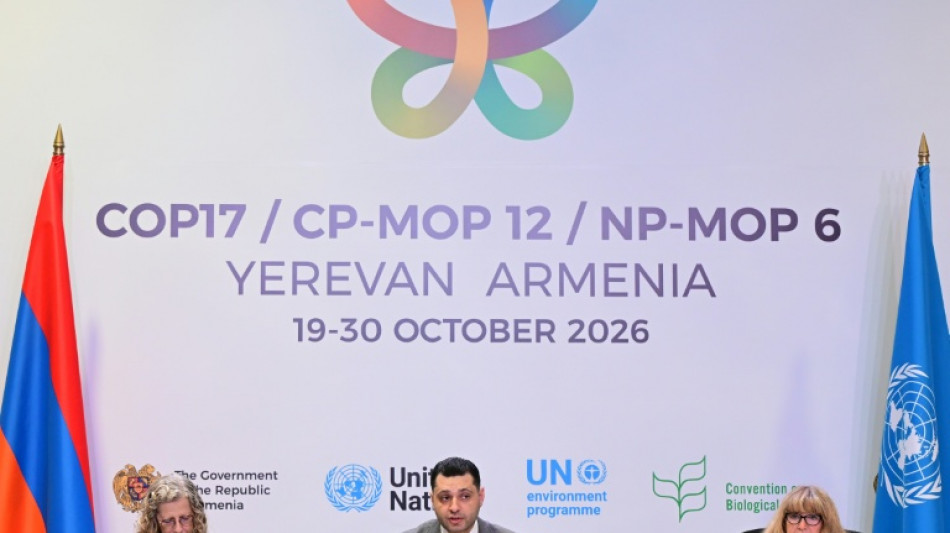
Nations far from a deal as UN nature talks enter final stretch / Photo: KAREN MINASYAN - AFP
Crucial negotiations to rescue a historic pact to protect nature entered the home stretch in Armenia on Monday with talks stuck and nations far from agreement as time counts down.
Nearly 200 nations are meeting in Yerevan to try to correct course after falling behind on a global pledge to halt and reverse the destruction of nature by 2030.
Most goals of the so-called "Paris Agreement for Nature" are off track, including targets to protect 30 percent of Earth's land and oceans and cut government spending that harms the planet.
After a week of hard-fought negotiations, nations are no closer to resolving some of the biggest sticking points, including how to fill a massive funding shortfall to meet the global nature commitments.
Government ministers arrive at the COP biodiversity summit on Tuesday to try to unblock the talks as pressure mounts to reach a strong, binding agreement when the summit concludes Friday.
Canadian Environment Minister Julie Dabrusin said there was "a lot of goodwill" at the summit but "a lot more progress to be made".
"The world is watching and needs us to come together and do the hard work to protect nature... And we can do it when we work together," Dabrusin told AFP in Yerevan.
COP17 president Hambardzum Matevosyan said he was working to "bridge differences" and praised negotiators for working late into the night behind closed doors.
"As a politician I must tell you that negotiations are never smooth... There's always a push needed," said Matevosyan, who is Armenia's environment minister.
He said early progress had been made, pointing to the adoption of initial decisions and pledges of hundreds of millions of dollars for nature.
- 'Destroying the Earth' -
The talks had been "a bit flat" but governments were making headway outside negotiating rooms, Anna Ducros from the International Institute for Environment and Development (IIED) told AFP in Yerevan.
On Monday, a coalition of nations including France, Colombia and Fiji pledged major reform of incentives that harm nature -- one of the thorniest issues on the agenda.
Governments still spend about $2.4 trillion a year subsidising industries like fossil fuels and have made little progress cutting support for these powerful sectors.
European nations meanwhile are leading a difficult campaign for wealthy emerging economies like China to also contribute to global biodiversity finance.
The summit comes at a testing time, with public finances under strain, aid budgets cut, and political attention fixated on wars and economic crises.
UN Environment Programme chief Inger Andersen urged delegates to remain "laser focused, prioritise your efforts, be efficient with the time remaining".
Panama's Environment Minister Juan Carlos Navarro told AFP he was sceptical the summit would achieve much.
"Climate. Biodiversity. Habitat loss. We are definitely not on track... humans are destroying the Earth, and we are not doing nearly enough," he said.
S.Janousek--TPP