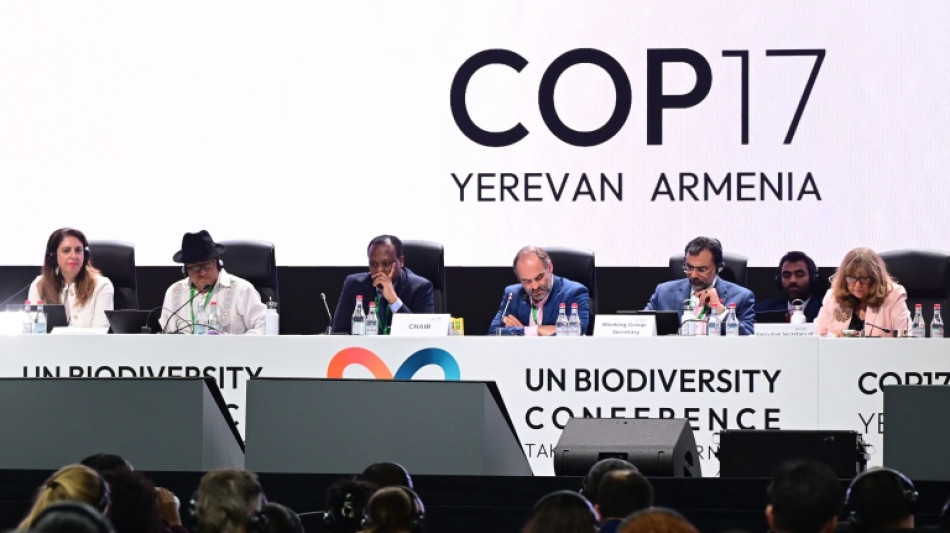
Nations agree crucial texts in overtime at UN nature summit / Photo: Karen MINASYAN - AFP
Nearly 200 nations on Friday adopted hard-fought agreements at a UN biodiversity summit aimed at putting the world back on track in efforts to halt nature's destruction by 2030.
Delegates cheered as the crucial texts were approved in overtime following two weeks of tense negotiations at the COP17 conference in Armenia's capital Yerevan.
"And that's it. Perfect," said COP17 president Hambardzum Matevosyan to applause as he brought down the gavel on the documents, the final versions of which were not immediately available.
The world adopted a historic pact in 2022 setting ambitious targets to halt biodiversity loss by 2030.
But ahead of the summit, the UN warned that countries would fail to meet the goal unless they urgently correct course.
Most of the objectives are falling short, including targets to protect 30 percent of Earth's land and oceans, tackle pollution, and provide poorer countries with greater conservation finance.
A draft COP17 text earlier called on countries to "accelerate" efforts to keep the pact alive and stressed "increased action" was needed to tackle the root drivers of nature loss.
Highlighting the disagreements that dogged the talks, the document proposed various options to achieve the 2030 goal. It was not immediately clear which of those options made the cut.
During negotiations, countries wrangled over reforming subsidies and other incentives that encourage activities harmful to nature, such as fossil fuels, intensive agriculture and overfishing.
A separate row revolved around finding new cash sources to fund conservation efforts around the globe -- a hot-button issue with public budgets under strain amid an energy crisis and conflicts in Ukraine and the Middle East.
To restore degraded ecosystems, save endangered species and conserve forests, wetlands and other vital natural habitats, the world needs an estimated $700 billion more every year than it currently spends.
The European Union led a charge for wealthy emerging economies such as China to join in paying for global conservation efforts, a contentious issue at COP17.
In a sign that a compromise was in the offing, another draft text that circulated earlier Friday invited countries outside the list of developed country donors to voluntarily join the group.
- Science under attack -
Efforts to refine the lacklustre Cali Fund -- a UN mechanism for sharing profits from corporations that use genetic data from plants and other organisms -- also proved difficult.
The fund set out to raise $1 billion a year for conservation in developing countries when it launched in early 2025. So far, it has attracted around $10,000.
Nations have also feuded over key scientific reports, with a small handful of countries accused of stonewalling efforts to accept the benchmark findings of a UN-backed biodiversity body.
"The attacks on science have bothered me a lot," French Ecological Transition Minister Monique Barbut said.
Around 70 ministers joined the negotiations this week in an effort to nudge things along, while indigenous leaders and civil society activists appealed to nations to act with greater urgency.
The COP17 summit was also expected to decide on Friday whether Panama or Ecuador will host the next biodiversity summit in 2028.
J.Marek--TPP