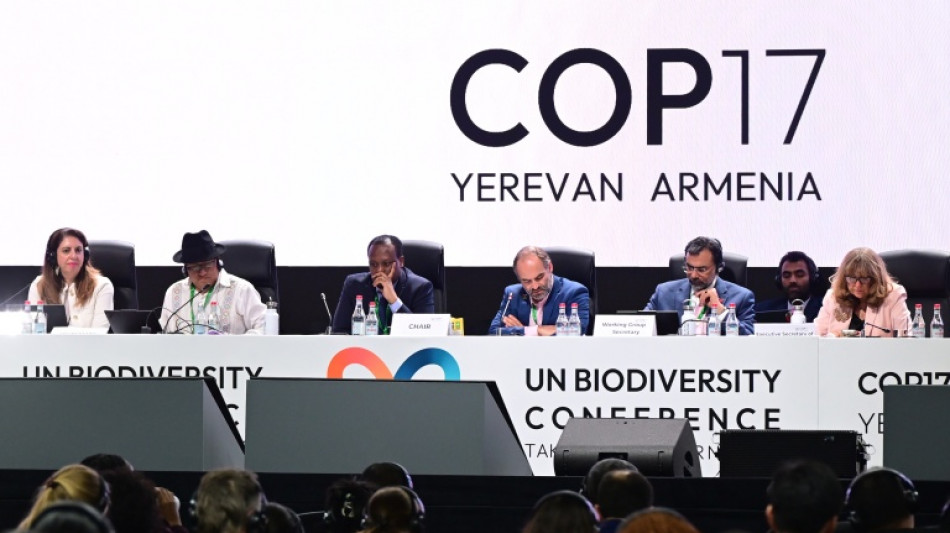
Nations commit to get nature goals back on track / Photo: Karen MINASYAN - AFP
Nearly 200 nations struck hard-fought agreements Friday at a UN biodiversity summit hoping to revive a flagging commitment to halt the destruction of nature by 2030.
Delegates cheered as the crucial texts were approved in overtime but the celebrations were tempered by acrimonious debates and limited progress on some of the toughest issues.
"And that's it. Perfect," said COP17 president Hambardzum Matevosyan in Armenia as he brought down the gavel on the documents, the final versions of which were not immediately available.
It marked a renewed push to meet a landmark 2030 commitment to protect the plants, animals and ecosystems that sustain life on Earth after countries fell short on their promise.
According to the United Nations, progress has lagged and key targets -- including protecting 30 percent of land and oceans, tackling pollution, and increasing money for conservation -- are off track.
Over two bruising weeks in Yerevan, nations were urged to correct course to keep the pact alive.
In a draft agreement of one closely watched text, nations were urged to "accelerate" their efforts and warned that "increased action" was needed to tackle the forces driving biodiversity loss.
It was not immediately clear which recommendations made the final adopted text. The agreed "global review" had still not been published hours after its adoption.
But "while not particularly exciting or detailed, it's good news that countries could reach agreement", Catherine Weller from Fauna and Flora told AFP.
Kirsty Leong from WWF International told AFP the "outcome has its strengths and weaknesses, but, on balance, it's a good outcome".
- 'Glacial' -
After the cheers subsided, negotiations on other items dragged into the early hours of Saturday as the tone soured.
"It's glacial progress," one negotiator from a developed country told AFP from inside the plenary hall.
Some welcomed modest progress on tackling subsidies and other incentives that encourage activities harmful to nature, such as fossil fuels, intensive agriculture and overfishing.
Governments have pledged to reduce this spending but made almost no progress, with an estimated $2.4 trillion still flowing every year to harmful subsidies.
"Even though the agreed decision text expresses it in weak terms, COP17 saw important political momentum to address harmful financial incentives -- including subsidies -- and that's urgently needed," An Lambrechts from Greenpeace International told AFP.
Juliette Landry from the IDDRI think tank told AFP "there was a lot of push and pull in every direction and in that context, it's hard to get things accepted".
A separate row revolved around finding new cash sources to fund conservation efforts -- a hot-button issue with public budgets under strain amid an energy crisis and conflicts in Ukraine and the Middle East.
To restore degraded ecosystems, save endangered species and conserve forests, wetlands and other vital natural habitats, the world needs an estimated $700 billion more every year than it currently spends.
The European Union led a charge for wealthy emerging economies such as China to contribute to global conservation efforts, a contentious issue at COP17.
In a sign of possible compromise, another draft text that circulated Friday invited countries outside the developed country donors to voluntarily join the group.
It did not compel any country to contribute to biodiversity finance but asked for volunteers to "signal interest".
- Science under attack -
Efforts to refine the lacklustre Cali Fund -- a UN mechanism for sharing profits from corporations that use genetic data from plants and other organisms -- also proved difficult.
The fund set out to raise $1 billion a year for conservation in developing countries when it launched in early 2025. So far, it has attracted around $10,000.
Nations have also feuded over science, with a small handful of countries accused of using tactics familiar from climate negotiations to weaken the role of a UN-backed biodiversity body.
"This UN conference made it clear that the obstructionist politics of the climate talks have entered the biodiversity negotiations," said Alfred DeGemmis from the Wildlife Conservation Society.
Around 70 ministers joined the negotiations this week in an effort to nudge things along but the pace was sluggish, with indigenous leaders and civil society activists appealing to nations to act with greater urgency.
The COP17 summit decided early Saturday that Ecuador would host the next biodiversity talks in 2028 after the South American nation defeated rival candidate Panama in a secret vote.
D.Dvorak--TPP