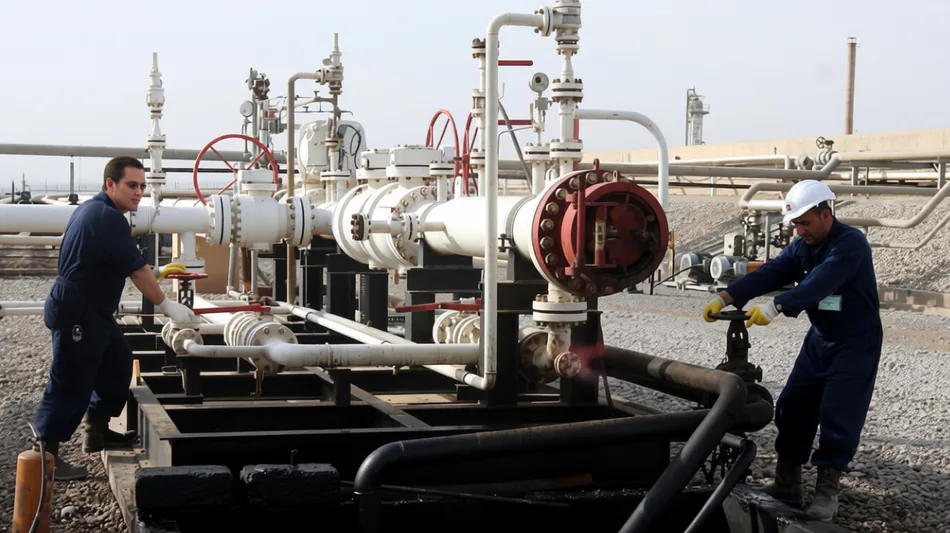
Iraqi PM Orders Military Move to Kurdistan Over Oil Dispute
Iraqi Prime Minister Ali Al Zaidi has ordered military units to move toward the Kurdistan region to assert federal control over disputed oilfields and border crossings. The directive, framed as part of an anti-smuggling campaign, has triggered unprecedented unity among Kurdish political factions and raised alarms in Washington and Gulf capitals regarding Iraq’s constitutional balance and regional security.
Prime Minister Ali Al Zaidi has ordered the deployment of army units toward the Kurdistan region of Iraq, a move designed to assert federal authority over border crossings and oilfields currently under Kurdish security control. The directive, officially presented as part of the government’s campaign against oil smuggling, has been met with unified condemnation from residents and political leaders in the semi-autonomous region, who view it as an attempt to undermine the constitutional order established after 2003.
The timing of the military mobilization is particularly sensitive given the recent withdrawal of United States and coalition forces from Erbil, which concluded in September. Analysts and regional observers warn that these developments could pave the way for Shiite majoritarian authoritarianism or even civil war, with significant ramifications for Iraq’s partners in the Gulf and in Washington.
While Baghdad has a duty to investigate oil theft, and Prime Minister Al Zaidi has taken action against alleged smuggling activities by Iran-backed militia groups such as Kataib Hezbollah, critics argue that the government must avoid drawing a moral equivalence between Kurdistan’s oil trade and recent allegations of theft in Jurf Al Sakhar. A government report has alleged the smuggling of crude oil from Kirkuk to Iran, but opponents contend that fighting corruption does not grant the federal government the mandate to override regional self-government.
Iraq’s 2005 Constitution recognizes Kurdistan as a federal region, protecting its legislative, executive, and judicial powers outside Baghdad’s exclusive remit. Simultaneously, it grants the federal government authority over national security and customs policy while mandating cooperation on customs administration and oil management. This delicate balance has historically served as a protection against renewed central autocracy, rooted in Kurdish fears of repression under the former regime of Saddam Hussein.
Many observers see the current danger in the increasing overlap between political office and armed power. The Co-ordination Framework, a dominant parliamentary alliance that backed Prime Minister Al Zaidi for office in May, includes parties linked to Iran-aligned factions within the Popular Mobilisation Forces (PMF). However, the PMF is not a uniform organization, and Iraq’s Shiite citizens hold diverse political loyalties. What is currently unfolding on the ground appears to be a manifestation of the governing coalition’s attempt to turn parliamentary dominance into lasting institutional control.
This overreach coincides with judicial actions that have already eroded Erbil’s authority. In 2022, the federal Supreme Court ruled that the Kurdistan Oil and Gas Law, which grants the regional government authority to regulate, contract, and market oil and gas operations within the region, is unconstitutional. Last year, the same court ordered Erbil to transfer revenues to the federal treasury. Ongoing disputes over budget transfers have strained salaries and public services in the region. While the courts present their rulings as constitutional enforcement, their cumulative effect has been to strengthen Baghdad’s control over Kurdistan.
Using military coercion in addition to judicial and fiscal pressure risks making this existing imbalance irreversible. It suggests that a monopoly based on sectarian identity does not require abolishing elections but can emerge when competing institutions retain their titles while losing their powers. Although Kurdistan’s leadership is imperfect and often divided, preserving it remains crucial as the strongest regional counterweight to the center.
Baghdad’s latest action has, for now, helped bridge Kurdish divisions. Both the Kurdistan Democratic Party (KDP) and the Patriotic Union of Kurdistan (PUK) have jointly condemned the unilateral measures. President Nechirvan Barzani rejected military threats, while PUK leader Bafel Talabani reaffirmed his party’s defense of Kurdish constitutional rights. This common stand may amount to a step toward healing intra-Kurdish rifts, placing shared rights ahead of party rivalry.
For Gulf states, the crisis poses practical security concerns. Years of relative stability in Kurdistan allowed Erbil to attract foreign capital and build energy infrastructure now exposed to regular attacks. In August, the UAE’s Dana Gas and Crescent Petroleum began deliveries of gas from the Khor Mor field to a federal Iraqi power plant, demonstrating how Kurdish development can benefit the entire country. A violent confrontation would place these assets, electricity supplies, and future investment at risk.
Additionally, armed conflict would harm the trust needed for trade and transport links connecting Iraq to its Arab neighbors. Gulf states’ efforts to develop economic relations depend on contracts and institutions surviving political disputes. Remnants of ISIS remain active in Kurdistan’s disputed territories; a confrontation would divide federal forces and Peshmerga fighters away from their shared mission of defeating extremists. Lessened coordination would provide extremists with space to rebuild and allow armed factions to entrench themselves along routes linking Iran to northern and western Iraq.
Washington has direct interests at stake. The Peshmerga’s partnership with US forces contributed significantly to the defeat of ISIS a decade ago, and Erbil hosts a critical base for American operations. If Washington treats military pressure on its Kurdish allies as an internal matter following its troop withdrawal, other regional actors may judge American commitments by that silence. Washington should demonstrate through continued diplomatic support and security assistance that a partnership survives the departure of troops.
Erbil remains a significant domestic obstacle to militia-controlled power. Greater Kurdish unity strengthens this role, giving more weight to the region in preventing Tehran-supported militias from operating freely across strategic routes and institutions. A stronger central government, therefore, would be a misleading measure of Iraqi sovereignty if achieved through coercion.
The economic stakes reinforce the security case. American energy companies operate in Kurdistan, while the US Department of Treasury has sanctioned networks accused of passing Iranian oil off as Iraqi crude. Military coercion will deter legitimate investors and leave more business to opaque intermediaries. Tackling illicit trade requires verifiable exports and credible institutions throughout Iraq; concentrating control in Baghdad offers no guarantee regarding either.
Washington can sustain training, intelligence links, and political influence through the new bilateral defense relationship. That framework will lose much of its value if Iraqi forces receiving American support use it to coerce another longstanding partner. It is incumbent on the US Congress to make that standard explicit in terms of assistance and require reporting on the conduct of units supported by Washington.
The US and its Arab partners could also make deeper diplomatic engagement, new financing, and security support conditional on respect for constitutional federalism. Baghdad and Erbil should commit publicly to resolving fiscal, territorial, and resource disputes without military coercion. Any security operation directed against smuggling activities should include a clearly defined legal mandate, joint regulatory mechanisms, and protections precluding unilateral changes in command and control.
The right path forward involves passing the long-standing federal oil and gas law to set revenue-sharing rules that ensure transparency for oil production and exports, providing predictable transfers to protect public salaries. If preventing smuggling is the real goal, a joint federal-regional mechanism supported by outside technical expertise could investigate alleged smuggling and settle implementation disputes.
Prime Minister Al Zaidi can strengthen the state by making its institutions worthy of trust, but he will not achieve this by attacking Kurdistan. Iraq will not attain sovereignty by replacing one form of centralized coercion with another.
M.Jelinek--TPP