Netanyahu Proposes Rotating Premiership to Eisenkot Amid Coalition Talks
Israeli Prime Minister Benjamin Netanyahu has proposed a power-sharing arrangement with his political rival Gadi Eisenkot, offering to step aside for a rotating premiership in an effort to form a unity government. The proposal was made late Saturday as both leaders prepare to meet Sunday morning to discuss the future of Israel's coalition following inconclusive October elections.
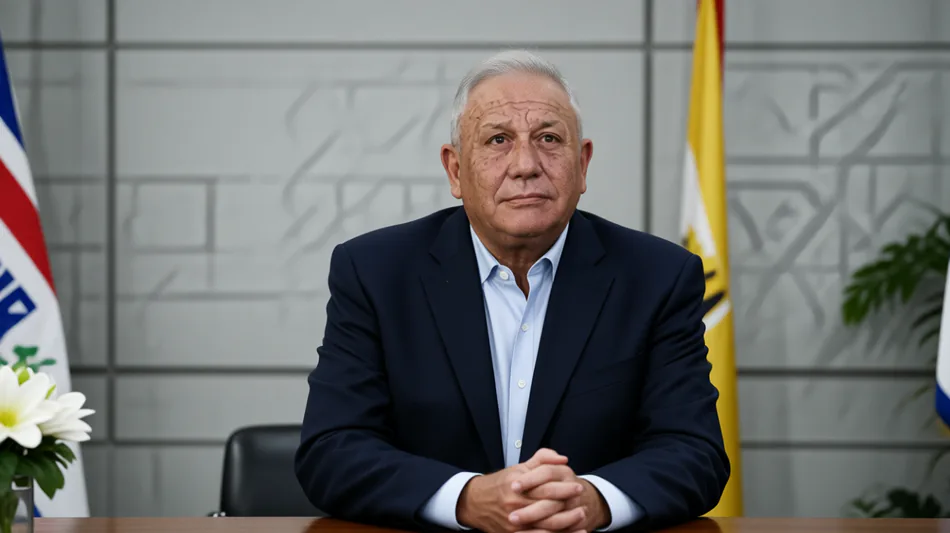
Israeli Prime Minister Benjamin Netanyahu has proposed a unity government to his political rival Gadi Eisenkot, offering the first turn as prime minister in a rotating arrangement. The proposal was announced late Saturday as both leaders prepared to meet Sunday morning at a hotel in Herzliya to discuss the formation of a new coalition following inconclusive elections in October.
In a social media post, Netanyahu stated he was prepared to set aside political differences to address the country's needs. "My responsibility as a leader requires me to set everything aside... and agree that Gadi Eisenkot will serve first as prime minister, while I will serve as alternate prime minister at the beginning of the term," Netanyahu said.
Netanyahu’s Likud party confirmed in a statement that the two men had spoken and agreed to meet at 10:00 local time (0800 GMT) on Sunday. The meeting marks a significant development in the ongoing efforts to form a government after President Isaac Herzog tasked Eisenkot with assembling a coalition after consulting all political parties.
Eisenkot, the chairman of the centrist Yashar party and former military chief, responded by challenging Netanyahu and Likud to demonstrate their commitment to a genuine unity government. "If Likud is ready for genuine unity, I am prepared to see how serious it is over the next 24 hours," Eisenkot said in a statement.
The proposal comes amid growing tension between the two camps. On Friday, Eisenkot accused Likud of deliberately delaying negotiations in an attempt to trigger fresh elections. He stated that Likud had been unwilling to compromise and had refused to put forward any concrete proposals over the previous two weeks. On Saturday, he added that his party had failed to receive a response to a detailed proposal submitted earlier.
Eisenkot had initially been expected to form a coalition with anti-Netanyahu parties but instructed his Yashar party to negotiate with Netanyahu’s right-wing Likud. His broad political camp remains divided over whether to form alliances with ultra-Orthodox parties, Arab-majority lists, or Likud. To date, Yashar has reached coalition agreements with the left-leaning Democrats and the right-wing Israel Beiteinu party. Together, these parties hold 36 seats in the 120-member parliament, well short of the 61 needed for a majority.
Netanyahu’s opponents have largely dismissed the rotating premiership offer. Youssef Jabareen, leader of the Arab-majority Joint List, which is expected to support an Eisenkot-led government without joining it, said the public wanted Netanyahu's government removed. "The democratic majority has decided: this bloodstained, neglectful government must go," he wrote, calling for the shared will of Jewish and Arab voters to be fulfilled.
Former Prime Minister Yair Lapid, co-chair of the centrist Beyachad party, described Netanyahu’s proposal as "yet another transparent con by a serial fraudster who has deceived every partner and violated every agreement."
Meanwhile, Mansour Abbas, leader of the second Arab-Israeli party, Raam, signaled a potential shift in his party’s stance. On Saturday, he implicitly recognized Hamas as a "terror group," a move that could pave the way for Raam to join an Eisenkot-led coalition. Eisenkot has made condemnation of Hamas a precondition for joining his proposed government.
Abbas stated he would be willing to participate in such a coalition from the outset or join it at a later stage. In an interview with Israel’s Channel 12, he pointed to a vote earlier in the week where Raam and the Joint List supported a bill proposing an inquiry into the security failures surrounding the October 7, 2023 attacks. The bill described Hamas as a "terror group," effectively acknowledging the designation.
Abbas added that he had previously avoided making such an explicit statement due to concerns about its potential impact on Israel's Arab community and relations with Palestinians in the West Bank and Gaza. Eisenkot had pledged earlier to announce the formation of a new government by the official December 6 deadline, without seeking a 14-day extension.
M.Soucek--TPP