The Prague Post - Melting sea ice in Antarctica causes ocean storms, scientists say

EUR -
AED 4.119277
AFN 72.35042
ALL 90.905699
AMD 404.670524
ANG 2.00752
AOA 1028.556445
ARS 1715.289321
AUD 1.595832
AWG 2.021782
AZN 1.909267
BAM 1.958077
BBD 2.257525
BDT 138.62118
BGN 1.960462
BHD 0.422992
BIF 3359.806562
BMD 1.121654
BND 1.432666
BOB 13.198346
BRL 5.569235
BSD 1.120903
BTN 106.353661
BWP 15.440954
BYN 3.291127
BYR 21984.422042
BZD 2.254221
CAD 1.571914
CDF 2597.751709
CHF 0.924518
CLF 0.028279
CLP 1106.466527
CNY 7.490462
CNH 7.479992
COP 3557.236121
CRC 511.494732
CUC 1.121654
CUP 26.900278
CVE 110.393358
CZK 24.324155
DJF 199.592073
DKK 7.474648
DOP 68.749938
DZD 150.678199
EGP 61.707405
ERN 16.824813
ETB 182.31168
FJD 2.50936
FKP 0.838781
GBP 0.838666
GEL 2.904465
GGP 0.838781
GHS 12.996111
GIP 0.838781
GMD 83.002704
GNF 9919.533782
GTQ 8.567962
GYD 234.752955
HKD 8.7971
HNL 30.091989
HRK 7.534264
HTG 146.900807
HUF 366.535252
IDR 20295.04259
ILS 3.483353
IMP 0.838781
INR 106.496019
IQD 1699.17569
IRR 2055291.088597
ISK 136.59501
JEP 0.838781
JMD 177.886835
JOD 0.795258
JPY 176.0655
KES 145.539223
KGS 98.087094
KHR 4579.324538
KMF 492.961399
KPW 1009.488724
KRW 1484.800745
KWD 0.348487
KYD 0.934086
KZT 508.911729
LAK 25222.326865
LBP 100372.406441
LKR 372.18275
LRD 191.102201
LSL 18.570192
LTL 3.311953
LVL 0.678477
LYD 7.178347
MAD 11.009601
MDL 20.231524
MGA 5068.893777
MKD 61.676714
MMK 2355.592952
MNT 4037.013109
MOP 9.055329
MRU 44.795085
MUR 52.897425
MVR 17.341321
MWK 1943.559844
MXN 20.983677
MYR 4.582293
MZN 71.676818
NAD 18.570192
NGN 1494.110467
NIO 41.24796
NOK 10.453548
NPR 170.165858
NZD 1.968346
OMR 0.431274
PAB 1.120803
PEN 3.849376
PGK 5.019837
PHP 71.35741
PKR 310.168143
PLN 4.401887
PYG 6482.537469
QAR 4.085751
RON 5.361281
RSD 117.63678
RUB 90.008863
RWF 1656.025518
SAR 4.209848
SBD 9.056886
SCR 15.744669
SDG 674.67927
SEK 11.136646
SGD 1.433687
SHP 0.838213
SLE 25.741766
SLL 23520.532382
SOS 640.544783
SRD 42.205628
STD 23215.977036
STN 24.52852
SVC 9.807403
SYP 14583.74737
SZL 18.569592
THB 37.877995
TJS 10.32871
TMT 3.937006
TND 3.346992
TOP 2.700674
TRY 55.816501
TTD 7.615855
TWD 36.550003
TZS 2967.450356
UAH 50.743401
UGX 4937.741281
USD 1.121654
UYU 44.952268
UZS 13413.596449
VES 986.818906
VND 28986.348297
VUV 133.053981
WST 3.104505
XAF 655.957
XAG 0.020828
XAU 0.000281397029
XCD 3.031326
XCG 2.020049
XDR 0.793068
XOF 655.957
XPF 119.331742
YER 264.825304
ZAR 18.653519
ZMK 10096.232709
ZMW 22.535202
ZWL 361.17219
SSP 6444.239519
MXV 2.368281
  • BCC

    -0.5500

    77.74

    -0.71%

  • RIO

    -0.7200

    83.42

    -0.86%

  • RBGPF

    2.6200

    72.77

    +3.6%

  • BCE

    -0.4100

    20.4

    -2.01%

  • RELX

    -0.0800

    40.54

    -0.2%

  • RYCEF

    -1.7500

    15.26

    -11.47%

  • NGG

    -0.7800

    81.86

    -0.95%

  • GSK

    -0.4600

    50.75

    -0.91%

  • BTI

    -0.9900

    59.48

    -1.66%

  • VOD

    -0.3800

    15.74

    -2.41%

  • CMSC

    0.0000

    19.6

    0%

  • JRI

    0.0700

    10.75

    +0.65%

  • AZN

    -1.0800

    171.49

    -0.63%

  • BP

    1.2700

    51.32

    +2.47%

  • CMSD

    0.1800

    19.78

    +0.91%

Melting sea ice in Antarctica causes ocean storms, scientists say
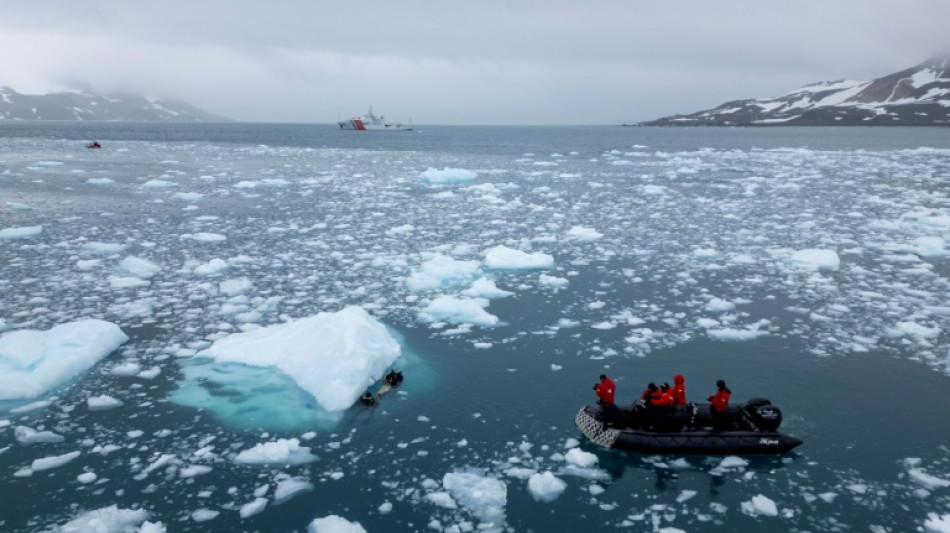
Melting sea ice in Antarctica causes ocean storms, scientists say / Photo: Juan BARRETO - AFP

Melting sea ice in Antarctica causes ocean storms, scientists say

The record-breaking retreat of Antarctic sea ice in 2023 has led to more frequent storms over newly exposed parts of the Southern Ocean, according to a study published Wednesday.

Text size:

Scientists know that the loss of Antarctic sea ice can diminish penguin numbers, cause ice shelves to melt in warmer waters, and impede the Southern Ocean from absorbing carbon dioxide.

But this new research, published in the peer-reviewed journal Nature, explores another consequence: increased heat loss from the ocean to the atmosphere, and an associated rise in storms.

Since 2016 there has been a large-scale reduction in Antarctic sea ice, but nothing like 2023 when a record amount failed to reform over the winter.

For this study, Simon Josey of the UK's National Oceanography Centre and colleagues focussed on three regions that experienced unusually high levels of sea-ice retreat that year.

Using satellite imagery, ocean and atmospheric data, and wind and temperature measurements, they found some newly ice-free areas experienced double the heat loss compared to a stabler period before 2015.

This was accompanied by "increases in atmospheric-storm frequency" over previously ice-covered regions, the authors found.

"In the sea-ice-decline regions, the June–July storm frequency has increased by up to 7 days per month in 2023 relative to 1990–2015."

The loss of heat caused by reduced sea ice could have implications for how the ocean circulates and the wider climate system, the study added.

Oceans are a crucial climate regulator and carbon sink, storing more than 90 percent of the excess heat trapped near Earth's surface by greenhouse gas emissions.

In particular, sea-ice retreat could mean changes in how a deeper layer of cold, dense Antarctic bottom water absorbs and stores heat.

The authors said further in-depth analysis of possible climate impacts were needed, including if sea-ice retreat could have even further-reaching consequences.

"Repeated low ice-cover conditions in subsequent winters will strengthen these impacts and are also likely to lead to profound changes further afield, including the tropics and the Northern Hemisphere," it said.

Z.Marek--TPP