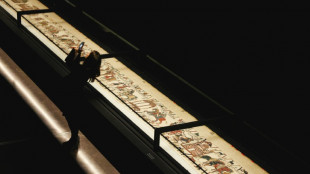
Fearing return to war, Iran conservationists shore up damaged heritage sites / Photo: ATTA KENARE - AFP
As fears of renewed conflict hang over Iran, conservationists are shoring up battered historic sites and taking stock of the damage caused by the war with the United States and Israel, though experts warn some repairs could take years.
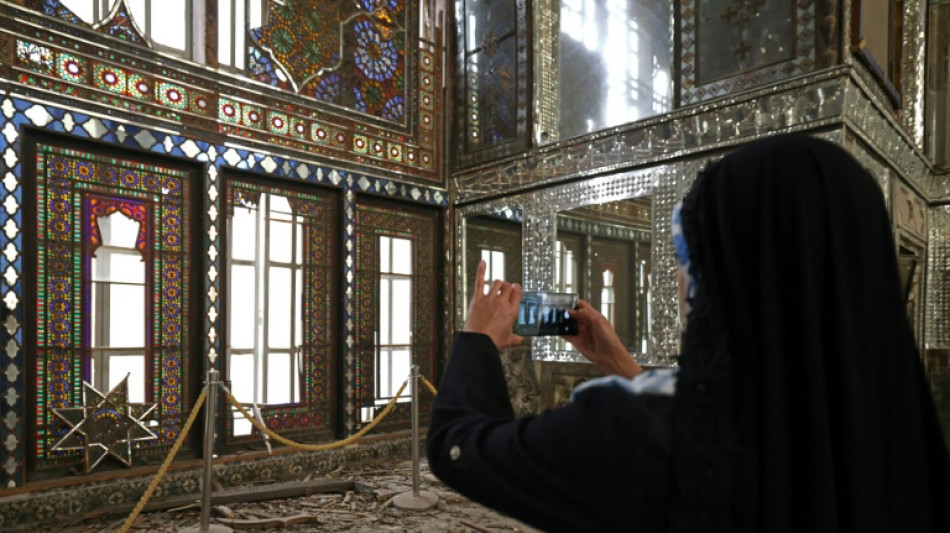
At Golestan Palace, a defining cultural landmark in central Tehran, shattered mirrors, broken doors and debris from ornate ceilings now lie scattered across parts of the site after shockwaves from strikes on the capital following the outbreak of war on February 28.
The former royal residence, known for its sprawling gardens, pools and royal halls, has been listed as a UNESCO World Heritage site since 2013.
The fragile truce in place since April 8 has allowed experts to begin gauging the scale of the damage, though the complex remains closed to the public.
"The damage has been assessed at several levels, but a more detailed specialised evaluation is still underway," Ali Omid Ali, a restoration specialist and head of the technical engineering department at Golestan Palace, told AFP.
For now, he said, teams are focused on stabilising damaged structures and preventing further collapse before broader repair work can begin.
"We need a more stable situation to start the restoration process," he said.
Initial estimates suggest work at the site could cost around $1.7 million, though the figure could rise following a full assessment, he added, noting that repairs could take "two or more years".
The palace, known for blending 19th-century Persian arts and architecture with European styles and motifs, is among at least five UNESCO-listed sites damaged during the conflict.
"Fifty to 60 percent of its doors and windows are broken," Jabbar Avaj, director of the Golestan Palace museums, told the official IRNA news agency.
The palace's famed Mirror Hall -- known for shimmering mosaics covering its ceilings and walls -- and the Marble Throne, a ceremonial platform supported by statues representing mythical and royal symbols, were "seriously damaged", he said.
- 'Shadow of war lingers' -
Other affected UNESCO-listed sites include Chehel Sotoun Palace and the Masjed-e Jame mosque in Isfahan, as well as the prehistoric sites of the Khorramabad Valley.
Beyond the listed sites, the war affected at least 140 culturally and historically significant locations across Iran, according to Hassan Fartousi, head of Iran's National Commission for UNESCO.
Among them are Tehran's Marble Palace, the Teymourtash house and the sprawling Saadabad Palace complex in northern Tehran, a former royal residence set within a vast park and home to several museums.
"The shadow of war still lingers over Iran's sky, and in this situation, we cannot plan very well for restoration," Fartousi said.
While the ceasefire since April 8 has largely halted fighting in major urban centres housing cultural sites, sporadic clashes have occurred in coastal areas and Gulf waters, and talks have so far failed to produce a lasting settlement.
Fartousi also worries that even after repairs, damaged heritage sites may never recover their original character, noting the entire idea of cultural heritage rests on "the concept of originality".
"Even if we do the restoration with our great artists and specialists in restoration, where will the originality be?" he said.
Funding remains a major challenge, with the Iranian government yet to announce a restoration budget as it struggles to offset the impact of the war and a US blockade that has severely disrupted exports.
"Unfortunately, UNESCO and other international organisations have limited budget," he said, adding that negotiations were ongoing to secure support.
Asked about the overall cost of restoring the damaged sites, Fartousi simply said: "All of them are priceless."
S.Danek--TPP