The Prague Post - Pension crisis engulfs France

EUR -
AED 4.27303
AFN 72.704848
ALL 95.250538
AMD 428.512994
ANG 2.082896
AOA 1067.937538
ARS 1660.224996
AUD 1.623429
AWG 2.096903
AZN 1.971651
BAM 1.95381
BBD 2.343483
BDT 142.824544
BGN 1.942668
BHD 0.438551
BIF 3460.907454
BMD 1.16333
BND 1.486567
BOB 8.039847
BRL 5.861907
BSD 1.1635
BTN 110.470595
BWP 15.620689
BYN 3.214385
BYR 22801.272636
BZD 2.340127
CAD 1.610805
CDF 2629.126533
CHF 0.915539
CLF 0.026377
CLP 1038.132516
CNY 7.87022
CNH 7.870988
COP 4146.039163
CRC 528.654789
CUC 1.16333
CUP 30.828251
CVE 110.653957
CZK 24.286613
DJF 206.746666
DKK 7.474516
DOP 67.473405
DZD 155.016045
EGP 60.514928
ERN 17.449954
ETB 184.399995
FJD 2.554615
FKP 0.864502
GBP 0.864244
GEL 3.106398
GGP 0.864502
GHS 13.680884
GIP 0.864502
GMD 84.923237
GNF 10208.223284
GTQ 8.875846
GYD 243.427902
HKD 9.117659
HNL 30.964066
HRK 7.530818
HTG 152.312917
HUF 356.066334
IDR 20741.014787
ILS 3.282511
IMP 0.864502
INR 111.184764
IQD 1524.228036
IRR 1571949.982345
ISK 143.613101
JEP 0.864502
JMD 183.27335
JOD 0.824795
JPY 185.709398
KES 150.547254
KGS 101.73327
KHR 4667.863959
KMF 493.251881
KPW 1046.828819
KRW 1759.955976
KWD 0.359679
KYD 0.969588
KZT 569.003177
LAK 25535.098366
LBP 104176.222755
LKR 384.997909
LRD 212.453148
LSL 18.908343
LTL 3.435012
LVL 0.703687
LYD 7.390473
MAD 10.688855
MDL 20.071042
MGA 4892.038856
MKD 61.650312
MMK 2442.376152
MNT 4160.650985
MOP 9.392992
MRU 46.495648
MUR 55.083878
MVR 17.911481
MWK 2017.61053
MXN 20.195989
MYR 4.612584
MZN 74.342576
NAD 18.9081
NGN 1594.158319
NIO 42.815843
NOK 10.789312
NPR 176.753711
NZD 1.960449
OMR 0.447299
PAB 1.16352
PEN 3.955421
PGK 5.084821
PHP 71.88681
PKR 323.907425
PLN 4.235587
PYG 7002.777909
QAR 4.24138
RON 5.24685
RSD 117.400976
RUB 83.760277
RWF 1708.116364
SAR 4.365298
SBD 9.344404
SCR 15.910439
SDG 698.58408
SEK 10.82659
SGD 1.48776
SHP 0.868544
SLE 28.616568
SLL 24394.455844
SOS 665.014159
SRD 43.374186
STD 24078.587142
STN 24.474759
SVC 10.181631
SYP 128.585331
SZL 18.894514
THB 37.970919
TJS 10.739386
TMT 4.071656
TND 3.398439
TOP 2.80102
TRY 53.411633
TTD 7.901986
TWD 36.431902
TZS 3036.29537
UAH 51.563387
UGX 4386.476148
USD 1.16333
UYU 46.712427
UZS 13863.880691
VES 638.301909
VND 30621.760151
VUV 137.812545
WST 3.158661
XAF 655.281197
XAG 0.015539
XAU 0.000259
XCD 3.143959
XCG 2.097037
XDR 0.813758
XOF 655.289637
XPF 119.331742
YER 277.570043
ZAR 18.965046
ZMK 10471.370421
ZMW 21.147554
ZWL 374.591862
  • CMSC

    0.0300

    22.77

    +0.13%

  • RYCEF

    -1.1200

    16.88

    -6.64%

  • VOD

    0.0100

    14.97

    +0.07%

  • NGG

    -1.5300

    80

    -1.91%

  • RBGPF

    -1.5000

    61.5

    -2.44%

  • AZN

    -5.9600

    179.71

    -3.32%

  • BCE

    -0.0500

    25.06

    -0.2%

  • GSK

    -1.2300

    49.31

    -2.49%

  • BTI

    -0.7900

    61

    -1.3%

  • RIO

    2.5700

    108.96

    +2.36%

  • BCC

    -1.1700

    68.33

    -1.71%

  • CMSD

    -0.1300

    22.8

    -0.57%

  • JRI

    -0.2600

    12.66

    -2.05%

  • BP

    1.0700

    42.94

    +2.49%

  • RELX

    1.8100

    34.6

    +5.23%


Pension crisis engulfs France


In autumn 2025 the long‑running battle over France’s retirement system morphed from a fiscal headache into an existential crisis. After years of protests and political upheavals, the government admitted that its flagship 2023 pension reform had failed to plug the funding gap. Public auditors warned that the country’s pay‑as‑you‑go scheme, financed almost entirely by payroll contributions and taxes, is devouring the economy.

A February 2025 report from the Cour des Comptes, the national audit office, found that the pension system spends almost 14 % of gross domestic product on benefits—four percentage points more than Germany. Those contributions produced an average monthly pension of €1 626 and gave retirees a living standard similar to that of working people. French pensioners not only enjoy one of Europe’s highest replacement rates but also have one of the lowest poverty rates (3.6 %). The generosity comes at a price: the same audit calculated that the deficit across the various pension schemes will widen from €6.6 billion in 2025 to €15 billion by 2035 and €30 billion by 2045, adding roughly €470 billion to public debt. Raising the retirement age to 65 would help, but even that would yield only an extra €17.7 billion a year.

The French model dates from the post‑war social contract, when four or five workers supported each pensioner. The demographic ratio has now fallen below two, and the number of pensioners is projected to rise from 17 million today to 23 million by 2050. Two‑thirds of the resources allocated to pensions already come from social security contributions, supplemented by a growing share of taxes. Employers’ labour costs are inflated because 28 % of payroll goes to pensioners, making French industry less competitive. Pensions absorb about a quarter of government spending, more than the state spends on education, defence, justice and infrastructure combined.

Reform fatigue and political paralysis
Successive administrations have tried to curb the rising bill but have been derailed by street protests and parliamentary rebellions. In April 2025 the Cour des Comptes bluntly warned that keeping the system unchanged is “impossible”; it argued that people must work longer and that pensions should be indexed more closely to wages rather than inflation. The 2023 reform, which is supposed to raise the statutory retirement age gradually from 62 to 64 by 2030, barely maintained balance until 2030 and did nothing to close the long‑term gap. When the government sought to postpone a routine pension hike to mid‑2025 to save €4 billion, opposition parties branded the proposal a theft from the elderly. Marine Le Pen’s far‑right National Rally and other groups blocked the measure, and even ministers within the governing coalition disavowed it. A 5.3 % pension increase granted in January 2024 to protect retirees from inflation cost €15 billion a year, wiping out most of the savings from pushing back the retirement age.

Popular resistance is fuelled by the fact that French workers already retire earlier than almost anyone else in the European Union. Although the legal age is now 62, the effective retirement age is only 60.7 years. OECD data show that French men spend an average of 23.3 years in retirement, far longer than in Germany (18.8 years). The low retirement age and high replacement rate mean pensions replace a larger share of pre‑retirement income than in most countries. With a median voter now in their mid‑40s, governments have little incentive to antagonise older voters, leading to what economists call a “demographic capture” of democracy. Reforms are generally adopted only when markets force governments’ hands—Greece, Portugal and Sweden passed painful changes under the threat of financial collapse.

Economic consequences
France’s public finances are straining under the weight of pension obligations. The country’s debt reached 114 % of GDP in June 2025, and interest payments are projected to exceed €100 billion by 2029, becoming the single largest budget item. In September 2025 Fitch downgraded France’s credit rating to A+, citing the lack of a clear plan to stabilise the debt. Political instability has made matters worse: Prime Minister François Bayrou was ousted in a no‑confidence vote in September after proposing a €44 billion deficit‑cutting plan. His successor, Sebastien Lecornu, immediately suspended the 2023 pension reform until after the 2027 presidential election, effectively throwing fiscal prudence out of the window to preserve his government. Investors now demand a higher risk premium on French bonds than on those of Spain or Greece.

The escalating pension bill is crowding out spending on education, infrastructure and innovation, sapping France’s potential for future growth. Economists warn that the longer reform is delayed, the more abrupt and painful it will need to be. Raising the retirement age beyond 65, modifying the generous indexation to inflation, broadening the tax base and encouraging more people to work past 55 are options that could restore sustainability. Without such measures, the pension system will continue to devour the nation’s finances, leaving younger generations to shoulder an ever‑heavier burden.

Conclusion
France’s pension crisis is not unique in Europe, but its scale and political toxicity are. The system reflects a post‑war social contract that promised long, comfortable retirements financed by ever‑fewer workers. That contract is now broken. Auditors, economists and even some politicians agree that the status quo is unsustainable and that tough choices lie ahead. Yet the clash between an ageing electorate intent on defending its privileges and a political class unwilling to tell voters hard truths has created an impasse. Unless France confronts its demographic realities and curbs the generosity of its pension system, the country will remain caught in a fiscal doom loop where pensions devour its economy and there is nothing to be done—until the markets force change.

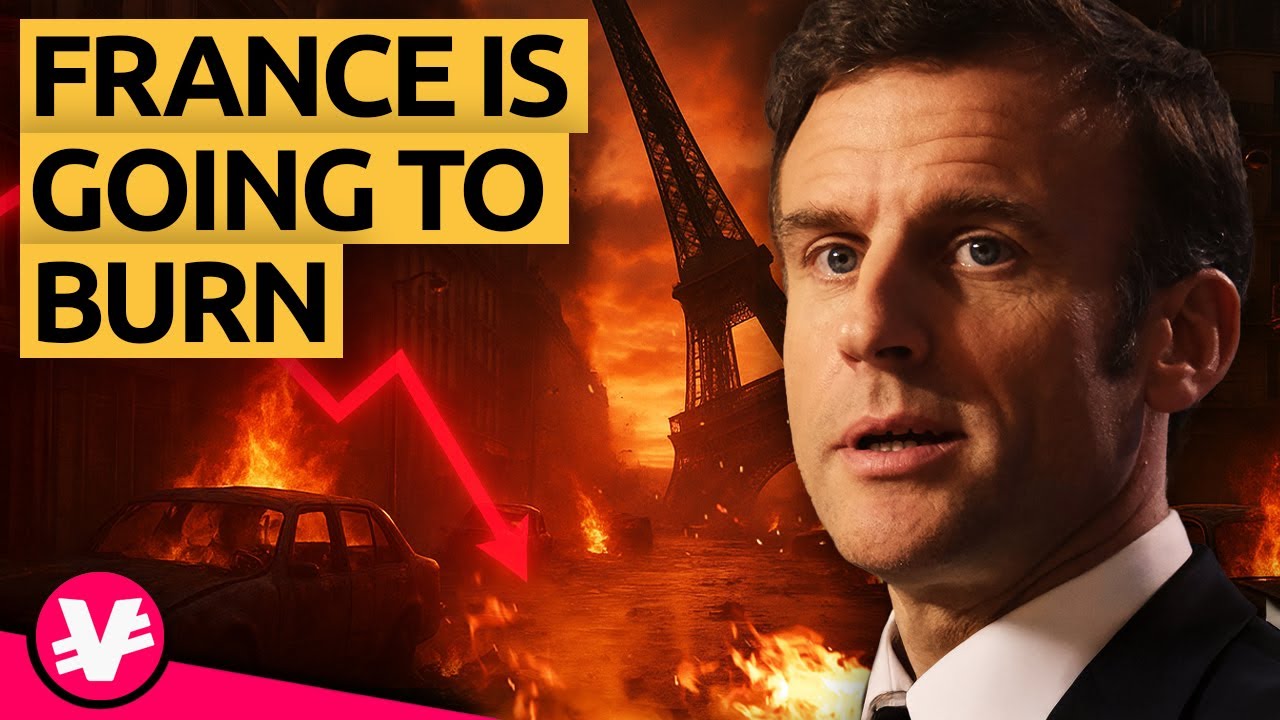
Featured


Marhabaan, welcome to the UAE and Dubai!

Marhabaan, welcome to the UAE and Dubai! The "skyward striving" Dubai next to ancient desert cities. Mysterious Bedouins and magnificent mosques exist peacefully alongside futuristic cities. Discover wadis and oases, golden sandy deserts, paradisiacal beaches and Arabian hospitality. The modern and the ancient Orient united in a book for dreaming.On this journey to Dubai and Abu Dhabi in the United Arab Emirates, the fairy tales of 1001 Arabian Nights meet the modern Arab world. These cascading cities enchant with their sky-high skyscrapers, fragrant souks, huge shopping centres and the ancient cultural heritage of the sheikhs.You can choose to stay in 4- or 5-star hotels with breakfast and swimming pools. You also have more options to book excursions so you can feel the magic of the East even more. If you want to do something out of the ordinary, you can spend an extra night in an enchanting hotel in the middle of the emirate's desert. Experience your own fairytale from 1001 nights and look forward to a holiday with plenty of casual extravagance in two superlative desert cities!

Trade and business at the Dubai Gold Souk

If Naif Deira is associated with a specific context, organization, or field, providing more details could help me offer more relevant information. Keep in mind that privacy considerations and ethical guidelines limit the amount of information available about private individuals, especially those who are not public figures. The Dubai Gold Souk is one of the most famous gold markets in the world and is located in the heart of Dubai's commercial business district in Deira. It's a traditional market where you can find a wide variety of gold, silver, and precious stone jewelry. The Gold Souk is known for its extensive selection of jewelry, including rings, bracelets, necklaces, and earrings, often crafted with intricate designs.Variety: The Gold Souk offers a vast array of jewelry designs, with a focus on gold. You can find items ranging from traditional to modern styles.Competitive Pricing: The market is known for its competitive pricing, and bargaining is a common practice. Prices are typically based on the weight of the gold and the craftsmanship involved.Gold and More: While gold is the primary focus, the souk also offers other precious metals such as silver and platinum, as well as a selection of gemstones.Cultural Experience: Visiting the Gold Souk provides not only a shopping experience but also a glimpse into the traditional trading culture of Dubai. The vibrant market is a popular destination for both tourists and locals.Security: The market is generally safe, and there are numerous shops with security measures in place. However, as with any crowded area, it's advisable to take standard precautions regarding personal belongings.Gold Souk is just one part of the larger Deira Souk complex, which also includes the Spice Souk and the Textile Souk. It's a must-visit for those interested in jewelry, and it reflects the rich cultural and trading history of Dubai.

Dubai: Amazing City Center, Night Walking Tour

During this excursion, we leisurely explore Dubai Downtown and Burj Khalifa in the evening, giving you the chance to witness the captivating transformation of the district as it comes alive with the vibrant glow of thousands of lights. As the sun sets, the illuminated facade of Burj Khalifa and the enchanting Dubai Fountain collaborate to produce a genuinely magical atmosphere.Dubai Downtown, also known as Downtown Dubai, is a distinguished and iconic district situated in the heart of Dubai, United Arab Emirates. It is a renowned neighborhood celebrated for its striking architecture, luxurious living, and exceptional entertainment options. At the core of Downtown Dubai stands the Burj Khalifa, a towering skyscraper that holds the title of the world's tallest man-made structure and serves as an emblem of modern Dubai.Burj Khalifa: The focal point of Downtown Dubai, Burj Khalifa, is famous for its groundbreaking height, reaching an impressive 828 meters (2,722 feet). Designed by architect Adrian Smith, its distinctive Y-shaped design encompasses a mix of residential, commercial, and hotel spaces.Dubai Mall: Adjacent to Burj Khalifa is the Dubai Mall, one of the largest shopping malls globally, featuring an extensive array of retail outlets, from high-end boutiques to international brands. The mall also provides various dining options, and entertainment attractions like an indoor ice rink and an aquarium, and hosts the mesmerizing Dubai Fountain.Dubai Fountain: Located just outside the Dubai Mall, the Dubai Fountain is a captivating attraction that presents a nightly spectacle of water, music, and light, captivating visitors with its perfectly synchronized performances.Emaar Boulevard: Stretching through Downtown Dubai, this boulevard is adorned with restaurants, cafes, and shops, making it a popular spot for leisurely strolls, dining, and people-watching.Luxury Living: Downtown Dubai boasts numerous upscale residential buildings and hotels, making it an appealing locale for those seeking a sophisticated urban lifestyle.Cultural Attractions: The Dubai Opera, an iconic cultural venue within the district, hosts a diverse range of performances, including opera, ballet, concerts, and theater productions.Transportation: Downtown Dubai is well-connected through public transportation, including the Dubai Metro, facilitating easy access to other parts of the city.In summary, Downtown Dubai is a dynamic and vibrant district that stands as a testament to Dubai's modernity and grandeur. It seamlessly combines architectural wonders with shopping, entertainment, and cultural offerings, creating a truly extraordinary destination.