The Prague Post - Iran-War and dangerous Lines

EUR -
AED 4.193908
AFN 74.217931
ALL 93.86116
AMD 419.477829
ANG 2.044296
AOA 1047.038219
ARS 1698.960696
AUD 1.641236
AWG 2.055254
AZN 1.945606
BAM 1.953752
BBD 2.300428
BDT 140.774868
BGN 1.930661
BHD 0.430542
BIF 3408.296434
BMD 1.141808
BND 1.474367
BOB 7.905687
BRL 5.852683
BSD 1.142123
BTN 108.801878
BWP 15.445994
BYN 3.264905
BYR 22379.433872
BZD 2.297102
CAD 1.618456
CDF 2578.20254
CHF 0.922937
CLF 0.026823
CLP 1055.670318
CNY 7.737975
CNH 7.744055
COP 3714.997441
CRC 519.559808
CUC 1.141808
CUP 30.257908
CVE 110.645627
CZK 24.262051
DJF 202.92254
DKK 7.477671
DOP 67.028555
DZD 152.153406
EGP 56.663021
ERN 17.127118
ETB 181.975672
FJD 2.54989
FKP 0.851662
GBP 0.851778
GEL 3.020128
GGP 0.851662
GHS 13.090873
GIP 0.851662
GMD 83.927274
GNF 10022.222803
GTQ 8.714939
GYD 238.922636
HKD 8.950918
HNL 30.69755
HRK 7.536165
HTG 149.47459
HUF 356.004712
IDR 20644.513933
ILS 3.437874
IMP 0.851662
INR 109.079359
IQD 1495.19738
IRR 1569700.343007
ISK 143.457179
JEP 0.851662
JMD 180.461582
JOD 0.809587
JPY 184.602971
KES 147.525915
KGS 99.849731
KHR 4575.799296
KMF 493.261391
KPW 1027.627465
KRW 1711.650332
KWD 0.353459
KYD 0.951752
KZT 538.440178
LAK 25757.476713
LBP 102248.893419
LKR 383.188239
LRD 207.242432
LSL 18.62864
LTL 3.371462
LVL 0.690669
LYD 7.313324
MAD 10.670239
MDL 20.071901
MGA 4904.065114
MKD 61.655684
MMK 2397.006778
MNT 4094.17613
MOP 9.221747
MRU 45.741255
MUR 53.756746
MVR 17.641363
MWK 1983.32063
MXN 19.945218
MYR 4.647589
MZN 72.96578
NAD 18.634735
NGN 1573.320304
NIO 41.859106
NOK 11.169854
NPR 174.072343
NZD 1.981274
OMR 0.439389
PAB 1.142108
PEN 3.873588
PGK 5.001546
PHP 70.160711
PKR 317.594281
PLN 4.327509
PYG 6943.78048
QAR 4.160181
RON 5.237591
RSD 117.289972
RUB 87.947546
RWF 1672.748501
SAR 4.286192
SBD 9.189935
SCR 16.812962
SDG 685.659811
SEK 11.091778
SGD 1.476248
SHP 0.852475
SLE 27.803445
SLL 23943.143907
SOS 652.547368
SRD 42.943969
STD 23633.117206
STN 24.72014
SVC 9.993653
SYP 126.206417
SZL 18.634726
THB 38.011205
TJS 10.570656
TMT 3.996327
TND 3.376901
TOP 2.7492
TRY 53.633041
TTD 7.759932
TWD 36.667451
TZS 3002.958116
UAH 50.811249
UGX 4202.667251
USD 1.141808
UYU 46.052321
UZS 13733.098053
VES 809.320716
VND 29992.437715
VUV 137.516329
WST 3.162017
XAF 655.275703
XAG 0.019099
XAU 0.000278
XCD 3.085793
XCG 2.05846
XDR 0.814279
XOF 654.256277
XPF 119.331742
YER 270.694139
ZAR 18.789093
ZMK 10277.644917
ZMW 20.587505
ZWL 367.661662
  • CMSC

    0.0650

    22.085

    +0.29%

  • RYCEF

    0.0000

    19.25

    0%

  • RBGPF

    5.8500

    67.35

    +8.69%

  • RIO

    1.0500

    90.54

    +1.16%

  • RELX

    0.3700

    32.44

    +1.14%

  • BTI

    -0.0151

    60.02

    -0.03%

  • GSK

    0.3100

    52.78

    +0.59%

  • AZN

    -6.8800

    171.61

    -4.01%

  • VOD

    1.6400

    14.72

    +11.14%

  • NGG

    0.2700

    82.59

    +0.33%

  • CMSD

    0.0700

    22.38

    +0.31%

  • BCE

    0.0600

    21.38

    +0.28%

  • BP

    0.6500

    39.2

    +1.66%

  • JRI

    -0.0200

    13.01

    -0.15%

  • BCC

    3.8200

    76.06

    +5.02%


Iran-War and dangerous Lines


In late February 2026, the United States and Israel launched a joint military campaign against Iran. What began as a focused attempt to neutralise the Islamic Republic’s nuclear programme quickly evolved into a broad offensive designed to cripple Iran’s government, degrade its missile forces and remove its top leadership. Within days the campaign had destroyed key command centres, decimated large portions of Iran’s air defences, and eliminated dozens of senior figures, including Supreme Leader Ali Khamenei, former parliamentary speaker Ali Larijani and Basij commander Gholamreza Soleimani. The scale and ferocity of the attack stunned the world. Iranian air and naval bases, intelligence headquarters and state media facilities were struck in rapid succession. Israel claimed near-complete air superiority after thousands of sorties and the use of more than ten thousand munitions.

Leadership decapitation and military degradation
Israel’s strategy, codenamed Operation Roaring Lion, has focused on removing the leaders who give Iran’s military and political apparatus cohesion. Within the first week, dozens of commanders and ministers were killed in so‑called “decapitation strikes”, including Esmail Khatib, the intelligence minister. These killings were accompanied by a sustained bombardment of Iran’s ballistic‑missile infrastructure and industrial base. Missile factories in Tabriz and Khorramabad were destroyed along with the Shahid Hemmat complex in Khojir. Analysts estimate that Iran’s missile output has fallen from roughly one hundred missiles per month to virtually zero, and more than eighty per cent of the country’s air‑defence systems have been neutralised.

This systematic dismantling extends to Iran’s nuclear programme. Though major enrichment facilities at Natanz and Isfahan were badly damaged in 2025, recent raids have reinforced those blows and targeted underground bunkers believed to house nuclear weapons components. There have even been reports of special‑operations teams attempting to seize fissile material. While Iran has continued firing salvos of missiles and drones at Israel and its allies, the scale of its launches has visibly declined. The rapid degradation of Iran’s military capacity reveals the depth of planning behind the U.S.–Israeli campaign and the advantage provided by air superiority and precision‑strike capabilities.

Expansion into economic infrastructure
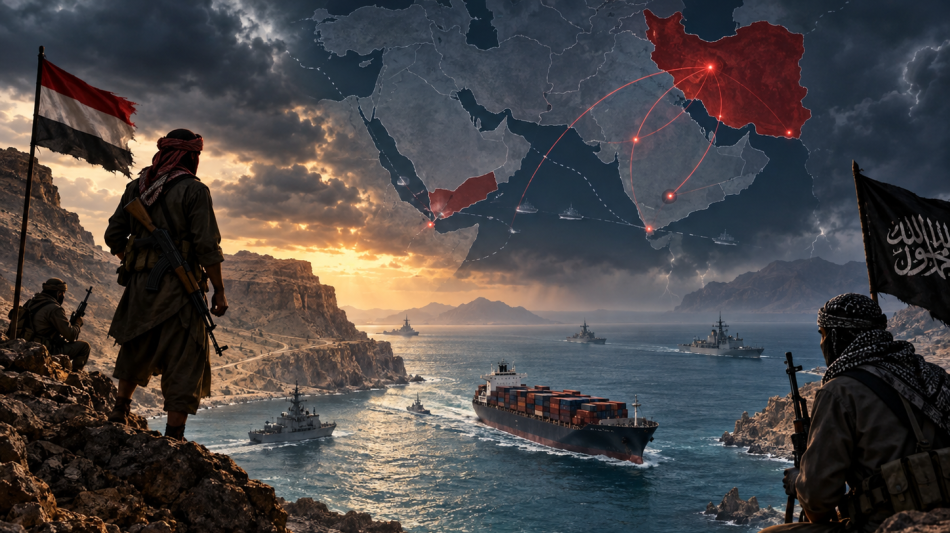
By early March, the conflict had entered a new phase as strikes expanded to Iran’s energy infrastructure. Oil storage depots in Tehran, gas installations near Bushehr and facilities linked to the South Pars field were hit. This expansion followed the killing of additional Iranian officials and is widely seen as an attempt to impose economic pressure on Tehran. Israeli ministers openly stated that any senior Iranian figure would be targeted without further approval. Iran responded by launching missiles at Qatar’s Ras Laffan gas complex and drones at refineries in Saudi Arabia and Kuwait. An oil refinery in Haifa was also struck, and Iran began restricting maritime traffic through the Strait of Hormuz. These attacks rattled global markets; gas prices surged, and major energy exporters called for an immediate end to the conflict.

Qatar’s prime minister warned that the attacks threatened global energy security and demanded a ceasefire. Diplomatic appeals were echoed by Turkey and other regional states fearful of being dragged into the conflict. The United Nations’ human‑rights chief, Volker Türk, decried the mounting civilian toll, noting that tens of thousands of schools, hospitals and homes had been hit across Iran. The war’s spillover into populated areas and energy infrastructure, he warned, marked a dangerous phase that risked humanitarian catastrophe and economic destabilisation.

Political dynamics and resilience of Iran’s system
The death of Ali Khamenei unsettled Iran’s political system, but it did not lead to immediate collapse. Within days the Assembly of Experts selected Khamenei’s son Mujtaba as his successor. Power brokers such as Ali Larijani and parliamentary speaker Mohammed Bagher Qalibaf continued to wield influence until their elimination. Iran’s government had long invested in redundant institutions to ensure continuity in the event of leadership losses. As a result, decision‑making has shifted among senior Revolutionary Guard commanders and clerical councils rather than disappearing altogether. Experts caution that Iranian strategy emphasises endurance and attrition rather than head‑to‑head confrontation. The regime appears determined to survive a protracted war, even if many of its leaders have been slain.

Nevertheless, there are signs of strain. Israel’s prime minister, Benjamin Netanyahu, claims the war could end more quickly than expected, insisting that Iran can no longer enrich uranium or manufacture ballistic missiles. At the same time Iran’s president, Masoud Pezeshkian, warns that the assassination of Iranian leaders sets a “dangerous precedent” that undermines international norms. He argues that unchecked aggression will embolden future violations of sovereignty. Tehran’s foreign minister, Abbas Araghchi, has vowed “zero restraint” if Iran’s infrastructure is targeted again, and military commanders threaten the destruction of Gulf energy facilities. The opposing narratives highlight the uncertainty surrounding the conflict’s trajectory.

Regional escalation and global impact
The war has spilled across the Middle East. Iran’s retaliatory strikes have hit energy hubs in Qatar, Saudi Arabia and Kuwait, while Israel has launched attacks against Iranian‑backed militias in Lebanon and Syria. Britain, France, Germany, Japan and other nations have joined efforts to secure shipping lanes through the Strait of Hormuz. The conflict has destabilised global energy supply chains at a time when economies are already strained. Some commentators warn that prolonged fighting could trigger a recession; others note that markets remain resilient for now. Among citizens following the war online, sentiment is polarized. Some describe the conflict as a wildfire that will inevitably spread; others mock media portrayals of “lines” being crossed and call for decisive action to remove Iran’s regime. There is also confusion about the health of Mujtaba Khamenei and speculation that internal divisions could further destabilise Tehran’s leadership.

Humanitarian and geopolitical implications
Beyond military and economic calculations, the war’s human cost is staggering. Reports suggest that more than sixty‑seven thousand civilian sites have been struck in Iran, and casualties across Iran, Lebanon and Israel number in the thousands. Schools, medical facilities and residential buildings have been destroyed, displacing millions and overwhelming humanitarian agencies. Human‑rights organisations argue that indiscriminate bombing and the targeting of energy facilities may constitute war crimes. The conflict’s expansion also risks drawing in Gulf states, NATO forces and other international actors, potentially igniting a broader regional war.

As Operation Roaring Lion enters its second month, questions loom over its ultimate goals. While decapitation strikes and military degradation have weakened Iran’s capacity, the regime’s resilience and the war’s widening scope raise doubts about a quick conclusion. If the aim is regime change, history warns that removing a leadership does not guarantee stability; Iraq and Libya offer cautionary precedents. Without a clear political strategy for the post‑war order, the Middle East could face prolonged chaos. For now the conflict has crossed lines that many thought would never be crossed: the assassination of a supreme leader, large‑scale attacks on energy infrastructure and the open involvement of multiple regional powers. The danger is that these red lines become the new normal, ushering in an era of perpetual confrontation.
Featured


Marhabaan, welcome to the UAE and Dubai!

Marhabaan, welcome to the UAE and Dubai! The "skyward striving" Dubai next to ancient desert cities. Mysterious Bedouins and magnificent mosques exist peacefully alongside futuristic cities. Discover wadis and oases, golden sandy deserts, paradisiacal beaches and Arabian hospitality. The modern and the ancient Orient united in a book for dreaming.On this journey to Dubai and Abu Dhabi in the United Arab Emirates, the fairy tales of 1001 Arabian Nights meet the modern Arab world. These cascading cities enchant with their sky-high skyscrapers, fragrant souks, huge shopping centres and the ancient cultural heritage of the sheikhs.You can choose to stay in 4- or 5-star hotels with breakfast and swimming pools. You also have more options to book excursions so you can feel the magic of the East even more. If you want to do something out of the ordinary, you can spend an extra night in an enchanting hotel in the middle of the emirate's desert. Experience your own fairytale from 1001 nights and look forward to a holiday with plenty of casual extravagance in two superlative desert cities!

Trade and business at the Dubai Gold Souk

If Naif Deira is associated with a specific context, organization, or field, providing more details could help me offer more relevant information. Keep in mind that privacy considerations and ethical guidelines limit the amount of information available about private individuals, especially those who are not public figures. The Dubai Gold Souk is one of the most famous gold markets in the world and is located in the heart of Dubai's commercial business district in Deira. It's a traditional market where you can find a wide variety of gold, silver, and precious stone jewelry. The Gold Souk is known for its extensive selection of jewelry, including rings, bracelets, necklaces, and earrings, often crafted with intricate designs.Variety: The Gold Souk offers a vast array of jewelry designs, with a focus on gold. You can find items ranging from traditional to modern styles.Competitive Pricing: The market is known for its competitive pricing, and bargaining is a common practice. Prices are typically based on the weight of the gold and the craftsmanship involved.Gold and More: While gold is the primary focus, the souk also offers other precious metals such as silver and platinum, as well as a selection of gemstones.Cultural Experience: Visiting the Gold Souk provides not only a shopping experience but also a glimpse into the traditional trading culture of Dubai. The vibrant market is a popular destination for both tourists and locals.Security: The market is generally safe, and there are numerous shops with security measures in place. However, as with any crowded area, it's advisable to take standard precautions regarding personal belongings.Gold Souk is just one part of the larger Deira Souk complex, which also includes the Spice Souk and the Textile Souk. It's a must-visit for those interested in jewelry, and it reflects the rich cultural and trading history of Dubai.

Dubai: Amazing City Center, Night Walking Tour

During this excursion, we leisurely explore Dubai Downtown and Burj Khalifa in the evening, giving you the chance to witness the captivating transformation of the district as it comes alive with the vibrant glow of thousands of lights. As the sun sets, the illuminated facade of Burj Khalifa and the enchanting Dubai Fountain collaborate to produce a genuinely magical atmosphere.Dubai Downtown, also known as Downtown Dubai, is a distinguished and iconic district situated in the heart of Dubai, United Arab Emirates. It is a renowned neighborhood celebrated for its striking architecture, luxurious living, and exceptional entertainment options. At the core of Downtown Dubai stands the Burj Khalifa, a towering skyscraper that holds the title of the world's tallest man-made structure and serves as an emblem of modern Dubai.Burj Khalifa: The focal point of Downtown Dubai, Burj Khalifa, is famous for its groundbreaking height, reaching an impressive 828 meters (2,722 feet). Designed by architect Adrian Smith, its distinctive Y-shaped design encompasses a mix of residential, commercial, and hotel spaces.Dubai Mall: Adjacent to Burj Khalifa is the Dubai Mall, one of the largest shopping malls globally, featuring an extensive array of retail outlets, from high-end boutiques to international brands. The mall also provides various dining options, and entertainment attractions like an indoor ice rink and an aquarium, and hosts the mesmerizing Dubai Fountain.Dubai Fountain: Located just outside the Dubai Mall, the Dubai Fountain is a captivating attraction that presents a nightly spectacle of water, music, and light, captivating visitors with its perfectly synchronized performances.Emaar Boulevard: Stretching through Downtown Dubai, this boulevard is adorned with restaurants, cafes, and shops, making it a popular spot for leisurely strolls, dining, and people-watching.Luxury Living: Downtown Dubai boasts numerous upscale residential buildings and hotels, making it an appealing locale for those seeking a sophisticated urban lifestyle.Cultural Attractions: The Dubai Opera, an iconic cultural venue within the district, hosts a diverse range of performances, including opera, ballet, concerts, and theater productions.Transportation: Downtown Dubai is well-connected through public transportation, including the Dubai Metro, facilitating easy access to other parts of the city.In summary, Downtown Dubai is a dynamic and vibrant district that stands as a testament to Dubai's modernity and grandeur. It seamlessly combines architectural wonders with shopping, entertainment, and cultural offerings, creating a truly extraordinary destination.