German leader not opposed to Chinese taking over car plants / Photo: Ina FASSBENDER - AFP
Chancellor Friedrich Merz signalled Wednesday he was not opposed to Chinese carmakers taking over struggling German auto plants but cautioned it could not be a long-term solution for the industry's problems.
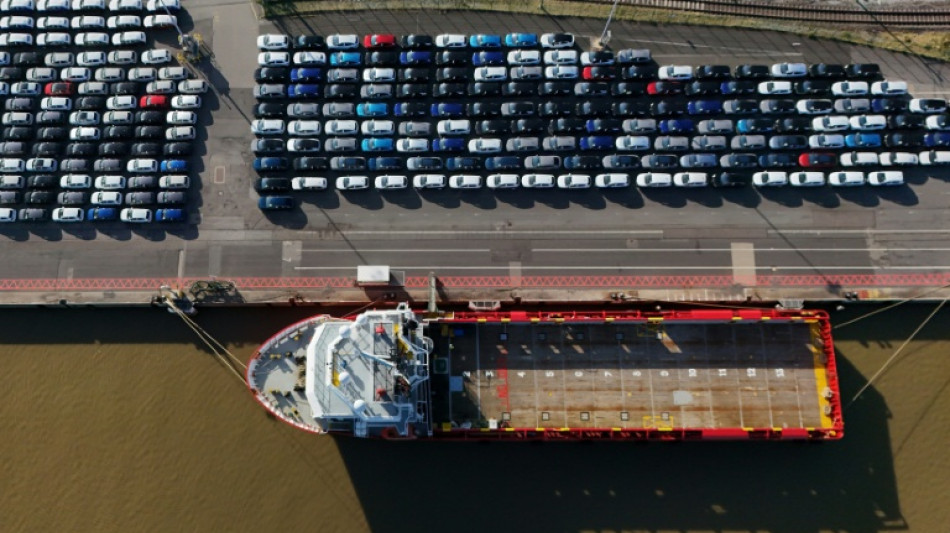
Germany's flagship auto sector is struggling with issues including weak demand in Europe, US tariffs and fierce competition from China.
Employment has shrunk in the automotive sector and Volkswagen CEO Oliver Blume told staff on Monday that up to another 50,000 job cuts were on the table on top of the same amount already agreed.
With many of the country's car plants operating below capacity, some have suggested fast-growing Chinese manufacturers could use some of their production lines or take them over entirely.
Chinese electric carmakers such as BYD are looking for production sites as they expand in Europe.
Asked about potential Chinese takeovers of German car factories, Merz responded: "The individual companies have to decide whether they want this or not."
But the leader, speaking at a press conference in Berlin, added: "I see it as an emergency solution, not as a solution to our own structural problems."
German carmakers have long complained of high costs and onerous red tape while critics contend the companies themselves need to restructure and improve how they are run.
Volkswagen boss Blume -- who also told staff that four plants might need to close -- said in April that he was open to Volkswagen's Chinese partners using its plants.
However, the group has since sought to dampen speculation of any imminent deals.
Other carmakers in Europe are also partnering with Chinese firms.
Jeep and Fiat owner Stellantis said in May it had formed a joint venture with China's Dongfeng to share manufacturing, sales and engineering operations on the continent.
Merz also took aim at China for allegedly under-valuing its currency, the yuan, making the country's exports cheaper abroad.
"From a European perspective, we cannot accept in the long term that we have to enter into competition with a partner whose currency is undervalued by 25 to 30 percent," he said.
"We can do whatever we like here, but if this is not corrected, we will always feel the disadvantages, not least through very high imports (and) subsidised products."
Germany's trade deficit with China has ballooned in recent years as exports have plunged at the same time as imports have steadily risen, hitting sectors such as machine-making, chemicals and cars.
G.Kucera--TPP